How To Start a Snack Business Online: A Beginner’s Guide to Selling Tasty Treats
Starting a snack business is one of the most accessible ways to break into ecommerce. Snacks are simple to make, easy to ship, and quick for customers to try.
It’s also a space where small brands can compete with big ones. Whether you want to create your own treats or curate boxes from different suppliers, there’s room to stand out.
Market demand is rising fast. The global snack box subscription market is projected to grow from $3.2 billion in 2024 to $9.7 billion by 2033.
That growth is driven by customers seeking healthier, more interesting snack options.
This guide gives you a clear, step-by-step plan for launching your brand with confidence. You’ll see how to choose products, test ideas, build your store, and reach your first customers.
You’ll also learn how snack subscriptions can create predictable revenue from day one.
Understanding the Snack Market
The snack market is expanding rapidly, and understanding it can help you find your ideal niche.
What’s driving market demand
Market trends regarding health are a major factor. Many shoppers now look for snacks with fewer additives, shorter ingredient lists, and functional benefits.
High-protein snacks are especially popular among people who want energy without relying on sugary products.
Allergen-aware snacking is also growing, with more customers seeking gluten-free, nut-free, or dairy-free healthy snack options.
Global and novelty snacks continue to gain traction. Consumers love discovering flavors they can’t get in local stores, and online shopping makes these products easy to access. Convenience still matters too. Many people want snacks they can grab during the workday, add to lunchboxes, or keep in the car.
Where small snack brands can win
New snack businesses succeed when they focus on market gaps. Here are the areas where small brands have a real advantage:
- Direct-to-consumer focus: Smaller brands can sell online without relying on retail shelves, giving them control over pricing, storytelling, and customer relationships.
- Niche discovery experiences: Customers enjoy curated boxes built around global flavors, unusual textures, local makers, or themed collections.
- Specialty diets: There’s demand for keto, vegan, low-sugar, gluten-free, and allergen-friendly snacks that large companies often treat as an afterthought.
- Fresh flavor variety: Big brands lean on safe, familiar products. Smaller brands can launch bolder flavors or limited-edition drops that feel exciting.
- Strong values and story: Mission-led brands, such as those focused on clean ingredients, sustainability, or small-batch processes, build trust quickly.
- Packaging personality: While major brands play safe with design, small businesses can create packaging that feels expressive, giftable, or artisanal.
These strengths make it easier for food entrepreneurs to stand out, even in a competitive market.
8 Steps for Launching a Snack Business
Now you’re familiar with the snack industry, we’ll explain the steps you need to take to start your company.
We’ve assumed that you’re starting from scratch, so the first job is to create a product you can sell.
1. Develop your product
A well-developed product gives your business a strong foundation and helps you stand out from larger competitors.
When it comes to choosing what you will sell, you broadly have three options:
- Make snacks yourself
- Source them from suppliers
- Work with a manufacturer
Let’s explore what to consider for each:
If you make snacks
Homemade snacks are ideal for those who are passionate about creating their own food products.
This approach can be the most rewarding; however, you’ll need to spend more time developing your product. There are a lot of considerations, including:
- Source ingredients: Choose suppliers that can deliver consistent product quality over time. Small variations can change texture or taste.
- Consider shelf life: Understand how long your snacks stay fresh and what affects that (moisture, oils, air exposure). Shelf life directly impacts packaging and shipping.
- Check texture and flavor changes over time: Taste your snacks after one, two, and three days to see how they evolve. This helps you refine recipes so they stay enjoyable throughout their expected shelf life.
- Make small test batches: Make small quantities in several variations to see what people prefer. Keep notes on recipe ratios so you can repeat the best versions.
- Choose suitable packaging: Pick packaging that protects texture. Crunchy snacks may need rigid or padded packaging; meltable items may need insulated layers; moisture-sensitive snacks need airtight seals.
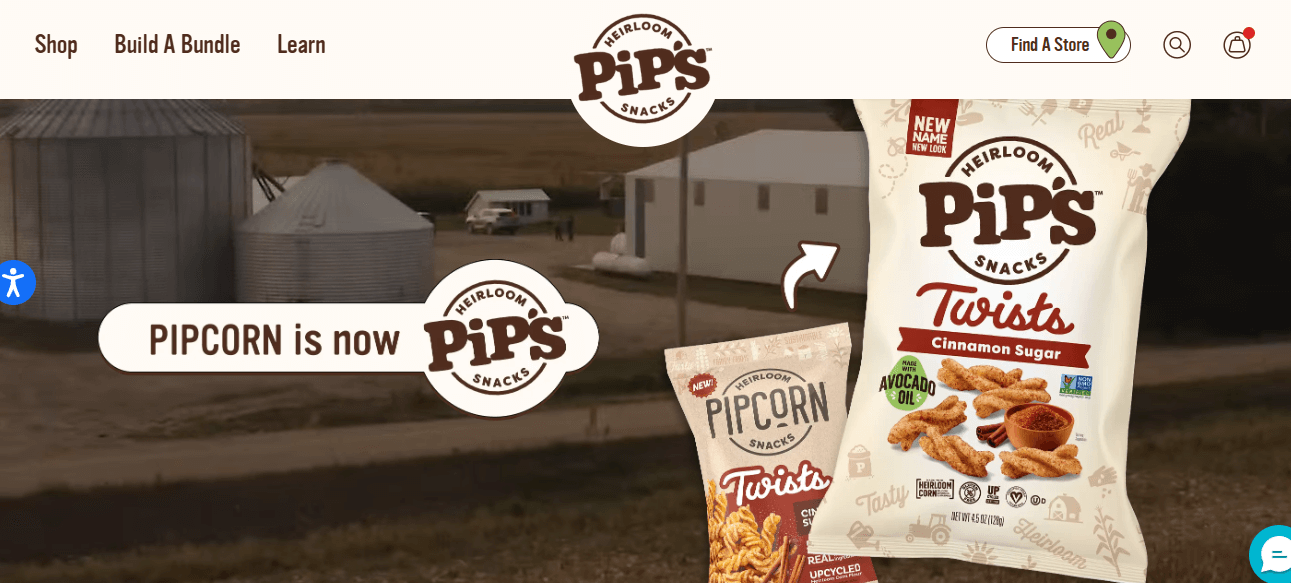
A good example of this process comes from Pip’s Heirloom Snacks, which started as a small-batch popcorn brand using heirloom corn.
In the early days, the founders spent months testing how their popcorn held its texture after packing and shipping, and they refined their recipe repeatedly before scaling.
Their progress shows how much product testing matters when you’re making snacks at home.
If you curate snacks
This is when you select snacks from different suppliers and assemble them into a themed box that feels curated and intentional. It’s a good option if you prefer sourcing over food production, because you can offer variety without making the snacks yourself.
It also gives you flexibility to rotate items, introduce limited-edition themes, and highlight smaller brands your customers may not have tried before.
Here’s what you’ll need to think about:
- Choose the right wholesalers: Look for reliable suppliers with consistent stock, clear allergen information, and flexible minimum orders.
- Identify “hero items”: Each box should include one or two standout snacks that customers will talk about or share.
- Balance favorites with discovery: Mix familiar products with new or unusual items to keep boxes exciting.
- Consider premium presentation: Boxes should feel curated, not thrown together. Add filler paper, dividers, or simple inserts to elevate the experience.
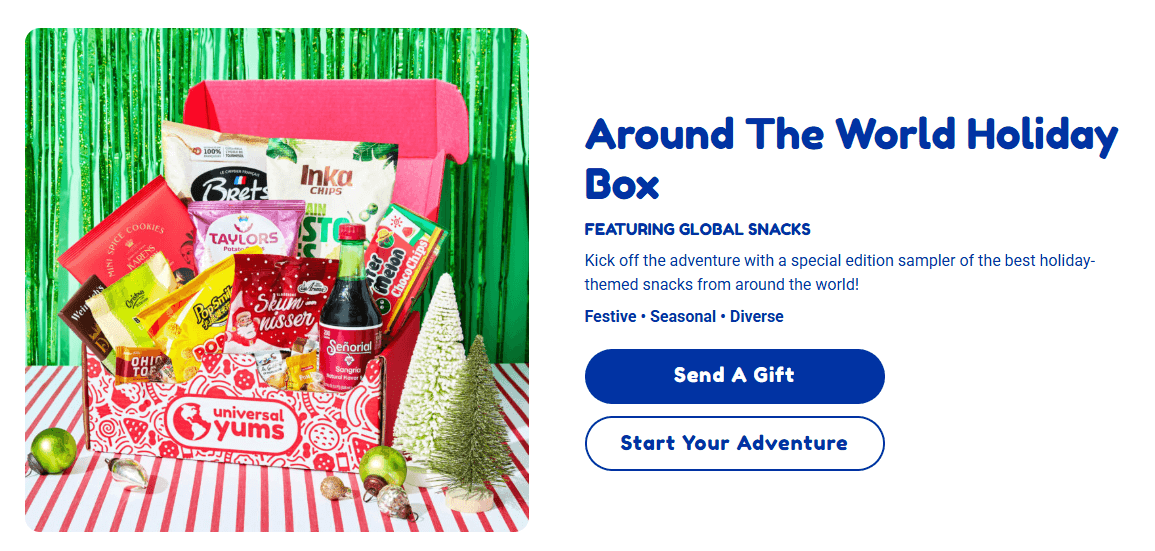
For example, Universal Yums sends a box of snacks from a different country each month, blending sweet and savory treats for a themed experience.
That model shows that with careful selection and quality curation, you can create a snack box people look forward to receiving regularly.
If you white-label snacks
White-labeling helps you build a brand without producing the snacks yourself. A manufacturer creates the snacks, and you package and sell them under your own name.
This reduces production risk, speeds up launch timelines, and gives you consistent quality from day one.
It’s a practical option for founders who want to focus on branding, marketing, or curation rather than hands-on production.
- Choose a manufacturer: Look for partners who offer flexible runs, transparent ingredient lists, and consistent quality.
- Set low MOQs (minimum order quantities): Start with a manufacturer that offers low MOQs so you don’t overcommit early.
- Get samples: Always order samples before committing. Test taste, texture, shelf life, and packaging durability.
- Negotiate starter runs: Ask whether they offer pilot batches or seasonal flavors so you can test new products without bulk commitment.
Validate your idea
Before investing in large batches, test whether people like your snacks and would buy them. This gives you confidence that your business will succeed.
A few simple tests can give you fast, useful feedback:
- Test flavors with friends and coworkers.
- Run polls on Instagram or TikTok.
- Sell sample packs at a local market.
You should also conduct market research to understand what your competitors are selling and what is popular in your target market.
2. Create a business plan
Once you know what kind of snacks you want to sell, the next step is choosing how your business will operate and make money.
Your business plan shapes your pricing, your marketing, and the tools you’ll need as you grow.
Choose your revenue model
Your revenue model determines how money comes in, how predictable it is, and how steady your cash flow will be.
- One-off sales: Simple, flexible, and good for testing demand.
- Monthly subscriptions: The most predictable model, ideal for discovery boxes or rotating flavors.
- Pre-paid bundles: Customers pay upfront for several boxes, improving cash flow.
- Corporate gifting: This is when businesses buy products in bulk to give to employees, clients, or event attendees. It offers higher margins, repeat orders, and strong opportunities for offices or events. However, you need to be prepared to handle large orders.
You can choose to offer a combination of these models. For example, you might provide one-off sales, but then offer better value for money if customers pay for a bundle or a monthly subscription.
The subscription model works for snack businesses because it reflects how people eat.
Snacks sell out quickly, so customers need regular restocks. A subscription turns that natural habit into predictable revenue for you and ongoing convenience for them.
- For founders: it simplifies everything: you know how many boxes to prepare, how much stock to order, and what your revenue looks like each month.
- For customers: it removes the friction of reordering and gives them something to look forward to, whether that’s new flavors, themed boxes, or healthy snacks that fit into their routine.
Subscriptions also build stronger relationships. When customers receive your snacks every month, they become familiar with your brand and stay engaged longer than one-off buyers.
Choose your distribution
Your distribution model determines where customers buy your snacks and how they reach them. It affects your margins, your workload, and how quickly you can grow.
Many new snack businesses mix two or more models, but it’s important to understand the strengths and weaknesses of each before you commit.
Direct-to-consumer (D2C)
This is when you sell through your own website or physical store. You keep full control of pricing and build one-to-one relationships with customers.
This model has the best margins because you avoid marketplace fees or retail mark-ups. It also gives you complete freedom to run subscriptions, limited flavors, or themed boxes.
The trade-off is that you’re responsible for all marketing, so early growth depends on social content, email, or paid ads.
Sell through a marketplace
Marketplaces like Etsy or Amazon offer instant visibility, which can be helpful for brand-new snack founders. People already shop there, which means you don’t need an audience before you launch.
The downside is margin pressure; marketplaces take a cut, shipping costs are higher, and you can’t easily collect customer emails or run subscription programs.
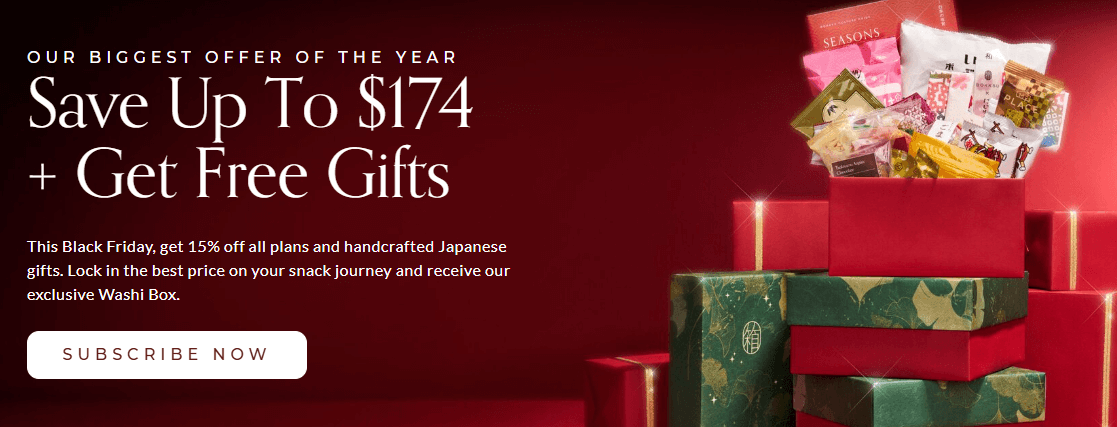
Bokksu, a Japanese snack subscription service, began as a direct-to-consumer brand before expanding into marketplaces and select retail stores.
Its path highlights how many successful snack business start with DTC control and then diversify once demand grows.
Provide wholesale snacks
Selling wholesale through retail partners like local grocery stores gives you real-world presence.
This model is effective for snacks with strong packaging and impulse-buy appeal. Retail gets your product in front of customers who may never find you online.
Local retail partners usually buy your snacks at a lower wholesale price so they can resell them at a profit.
You make less per unit than you would through your own website, but you gain steady, repeat orders and exposure to customers who may never find you online.
Office snack programs
This is when companies buy snacks in bulk for meetings, events, or ongoing office deliveries. Orders are larger, margins are higher, and demand is often recurring.
The drawback is that it requires a reliable fulfillment workflow and consistent product availability.
Know your customers
Before you launch your business, it’s also a good idea to know what customer segments you will target. This makes marketing easier and improves your product decisions.
Examples of potential customer profiles, include:
- Busy families
- Health-focused buyers
- Office managers
- Students
- Travelers
- Food explorers
3. Create your snack brand
Your brand should make one thing instantly clear: why your snacks exist and who they’re for.
Your story doesn’t need to be dramatic, just honest. Maybe you wanted more high-quality ingredients, missed the flavors from home, or loved discovering global snacks.
These small details help customers understand what you care about.
Visual identity matters
Your color palette should match the experience your snacks promise. For example, you might use bright colors for playful or global flavors, calmer tones for health-focused or clean-label products.
Packaging and photography should help customers imagine tasting the product. For example, highlighting texture, crunch, or softness. Customers should be able to imagine the taste from one photo.
Create a value proposition
Your value proposition is the core promise your brand makes to customers. It explains, in plain language, what makes your snacks worth choosing, whether that’s cleaner ingredients, bold global flavors, high protein, allergen-friendly options, or small-batch craftsmanship.
A good value proposition helps customers understand, within seconds, why your product fits their needs.
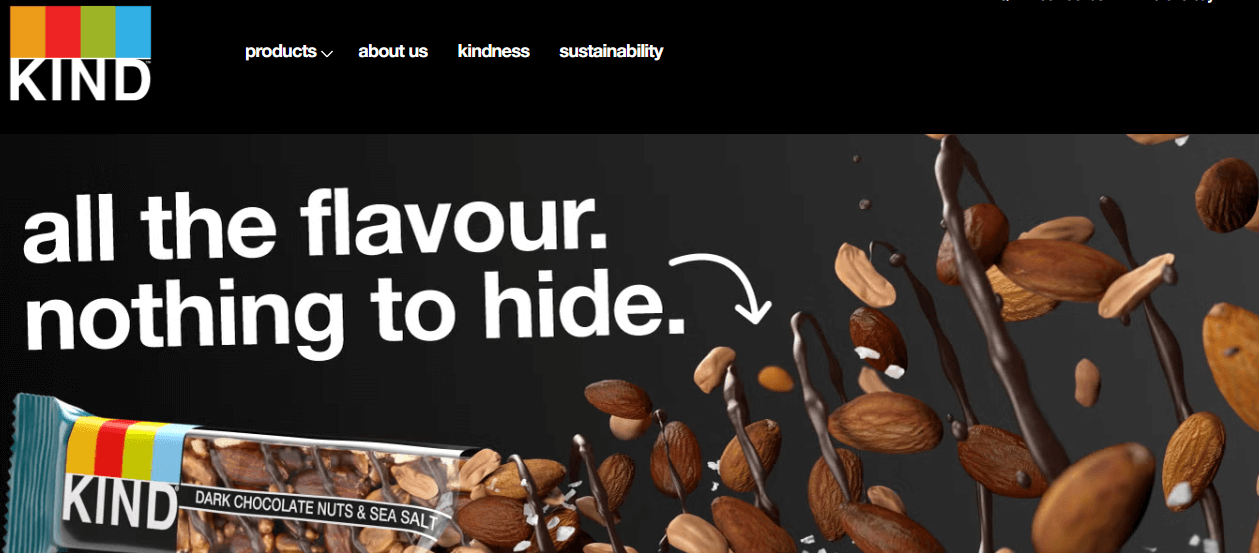
A good example of a snack brand with an effective value proposition is KIND Snacks.
Its entire identity revolves around simple ingredients and transparent nutrition. Instead of talking about complex health claims, it focuses on one idea: snacks made from ingredients you can recognize and feel good eating.
Its packaging highlights whole nuts and fruit, while its messaging emphasizes being “kind to your body and taste buds.” It’s short, obvious, and easy for customers to remember.
4. Legal, food safety, and labeling basics
Once your product ideas take shape, it’s important to understand the basic rules around selling food.
If you’re producing snacks yourself, you must follow local food industry laws. These rules determine what you can sell, where you can prepare it, and how your products must be labeled.
United States
In the US, regulations are set at the state level. Each state has its own Cottage Food Law, which defines:
- What types of snacks you can legally make at home
- Whether inspections or permits are required
- Any sales caps or allowed sales channels
- What must appear on your labels
- Whether you can sell online or ship across state lines
The best place to check your state’s rules is the National Agricultural Law Center.
This links directly to each state’s statute or health-department guidance. Most states allow shelf-stable snacks such as baked goods, granola, trail mixes, brittles, and candies. Foods needing refrigeration are generally not permitted under cottage-food rules.
For food-handling certification, many states direct businesses to ServSafe.
United Kingdom
In the UK, home-based snack producers must follow national food-hygiene laws, even if they work from a domestic kitchen.
You must:
- Register as a food business with your local council (at least 28 days before trading).
- Follow Food Standards Agency (FSA) hygiene requirements.
- Follow FSA allergen-labelling rules (including Natasha’s Law).
Unlike the US, the UK doesn’t restrict specific foods for home kitchens, but your workspace must meet hygiene standards and be inspection-ready. Label accuracy, allergen disclosure, and safe storage practices are mandatory.
5. Plan your pricing
A strong pricing strategy is essential in the snack world, where portions are small, shipping can be expensive, and ingredient costs vary.
Before you launch, you need a clear view of what each bag, box, or bar actually costs you to produce, pack, and deliver.
This helps you set prices that feel fair while keeping your margins healthy.
Begin by breaking down every expense tied to getting a snack into a customer’s hands:
- Ingredients: Include waste, test batches, and variations.
- Packaging: Bags, boxes, labels, inserts, and any protective materials.
- Time: The hours you spend making, curating, or packing.
- Labor: Anyone helping with the production process or fulfillment.
- Software: Your ecommerce platform and any essential tools.
- Shipping: For small ecommerce sellers, shipping can account for up to 25 percent of total startup costs.
Choose a pricing model that fits your business
Once you understand your costs, decide how customers will pay for your snacks. The right model depends on whether you sell individual items, curated boxes, or recurring deliveries.
Per-product pricing: Works well for founders starting with one or two hero snacks. It’s simple and familiar, but revenue can fluctuate unless you build consistent repeat customers.
Box-level pricing: Ideal for curated or mixed snack boxes. You set one clear price for the entire experience instead of itemizing. Customers think in terms of value, not unit count, so this model often converts better.
Tiered snack boxes: Offer small, medium, and large boxes at increasing price points. This helps people choose based on budget while increasing your average order value.
Subscription pricing: A strong fit for snack businesses because consumption is predictable. Monthly or bi-monthly subscriptions give customers convenience and give you stable, recurring revenue. Higher-tier subscriptions (more items or premium snacks) help lift margins.
Pre-paid options: Some customers are happy to pay upfront for three or six months at a discount. This improves cash flow, which is useful when you’re managing ingredients, packaging, and production cycles.
How to keep your margins healthy
Margins can be tight in the snack category, so you need pricing that reflects the real cost of producing and shipping your product.
- Standardize your portions
- Choose packaging that balances protection and cost
- Negotiate bulk discounts with suppliers
- Batch your production and fulfillment
- Ensure your brand positioning supports your pricing
Test your prices before launch
Pricing takes time to get right. Learn what customers are willing to pay by watching how they respond to early offers. A testing phase helps you do this.
Here are some tests you can run:
Pre-launch offers: Start with a limited batch and sell to a small group. Track which prices convert best and whether customer feedback mentions value or cost.
A/B testing: If you’re selling curated boxes, test two price points for the same product. A landing page with two versions or separate product pages can show you which price drives more purchases or sign-ups.
Ask direct questions:
People are often more honest in person than online. When handing out samples or selling at farmers markets, ask early buyers:
- “Would you buy this again at this price?”
- “What price feels right for this portion size?”
Study your competitors: Look at brands with similar ingredients, formats, and portion sizes. Note how they price add-ons, bundles, and subscriptions. Your customers will make similar comparisons.
Look for willingness-to-pay signals: If customers buy multiple units without hesitation or upgrade to larger boxes early, you may be underpriced. If they hesitate, ask questions, or wait for discounts, your price may be too high for your segment.
6. Create your online store
Your website is the place customers come to explore your snacks, understand what you offer, and decide whether to buy.
Keep it clear, honest, and easy to browse so people can find the information they need quickly.
There are some essential pages that every snack business needs. These include:
Product page: This shows what customers get: portion size, ingredients, flavor notes, dietary tags, and close-up photos that highlight texture. One strong image often sells the snack more than anything else.
About page: A short story explaining who you are and why you make or curate snacks. This is especially important for allergen-aware, small-batch, or global discovery brands where trust drives conversions.
FAQ: Cover practical details like shelf life, storage, delivery days, subscription management, and how limited flavors work.
Allergen and ingredient info: Make this easy to find. Snack customers skim quickly, and transparency builds confidence.
Shipping and returns: Explain delivery zones, timing, and what you’ll do if a package arrives damaged or stale.
Subscription page: Show delivery frequency, flexibility, and what customers can expect each month.
You can boost conversions by using short, direct calls to action (CTAs) throughout your website.
You should also ensure that your website is optimized for mobile devices. Most modern online platforms do this automatically these days; if yours doesn’t, consider switching.
Subbly’s AI Website Builder lets you create a subscription-ready snack store without technical skills. All you have to do is enter a short prompt like “create a website for a monthly keto-friendly snack box with rotating flavors” and the builder generates complete pages, layouts, and product sections.
You can adjust colors, swap images, refine text, and add subscription options using simple prompts. This gives you a professional, conversion-ready storefront without hiring designers or managing plugins.
Try it for free and discover how easy it is. Just visit our homepage and type instructions into the prompt. You can choose from our suggested prompts or you can write your own.
Once you sign up for a free trial, the AI agent will convert your instructions into code and provide you with a unique, functional subscription website.
You can then edit it using further prompts, code, or our intuitive drag-and-drop editor.
7. Packaging, shipping, and fulfillmen
Ensuring your snacks reach customers quickly and in good condition is just as important as making them taste good.
Robust packaging and a reliable delivery workflow will shape your customers’ first impressions and determine whether they come back.
Crunchy items can shatter. Chocolate and coated treats can melt. Soft-baked snacks can dry out or pick up moisture. Your packaging needs to counter these problems.
Ship in a way that keeps snacks intact
Shipping affects both your margins and the customer experience. Even the best snack can arrive disappointing if crushed, stale, or overheated.
One of the most useful early steps is simply mailing your own product to yourself. Seeing how it survives real transit conditions gives you confidence in your packaging choices.
You can also make shipping easier by:
- Starting local: Shorter routes mean fewer handovers and fewer surprises.
- Right-sizing your mailers: Snacks are light, so avoid bulky packaging that triggers higher dimensional-weight fees.
- Planning for seasonal heat: Insulated mailers or ice packs may be necessary during summer months for meltable products.
Build a fulfillment workflow you can manage
Your fulfillment process needs to be repeatable and scalable. We recommend breaking the workflow into clear steps:
1. Prepare
Store ingredients, finished snacks, and packaging where they’re easy to access. Keep flavors or product variants separated to avoid mix-ups.
2. Pack
Many founders batch-pack orders, completing all product prep first, then all labeling, then all boxing. This reduces mistakes and speeds up the process.
3. Label and confirm
Print labels in batches and use your ecommerce system to send automatic confirmation and tracking emails. Customers feel more confident when they’re updated at each stage.
4. Dispatch
Work with one courier at first, so you can learn how their pickup times, delivery routes, and handling impact your snacks.
A simple system like this helps you maintain consistency and gives customers the reliable experience that leads to repeat purchases, especially if you plan to offer snack subscriptions.
8. Marketing that makes people hungry
Customers can’t taste your product before buying, so your marketing content needs to communicate flavor, texture, and personality in a way that feels immediate.
In other words, snack marketing works best when it’s sensory. The more you help customers imagine crunch, softness, spice, or sweetness, the more they’ll want to try your product.
A good example of this comes from Little Moons, the mochi ice cream brand that went viral on TikTok and YouTube.
Its growth wasn’t driven by polished ads, but by simple “try it with me” videos that focused on the moment of eating.
One of its early viral clips shows someone opening the pack, taking a bite, and reacting to the texture and flavor in real time.
This format works because it highlights the things that matter for snacks: how they look, how they feel when bitten, and the immediate reaction. It’s quick, honest, and makes it easy for viewers to imagine the first bite for themselves.
Use channels that match snack-shopping behavior
Snacks are impulse-driven. People often discover them while scrolling. Focus your attention on platforms built for fast, visual discovery.
- TikTok and Instagram Reels work well for bold flavors, novelty drops, and reaction videos. These platforms reward quick engagement and personality
- YouTube Shorts are good for blind taste tests, product comparisons, and first-bite reactions — formats that feel honest and unscripted.
You don’t need to appear everywhere. One or two high-performing channels will outperform five mediocre ones.
Encourage first-time buyers with small, low-risk offers
The hardest sale is the first one. Once people taste your snacks, selling again becomes much easier.
A few simple incentives can help new customers try your brand:
- A sampler pack at a lower price
- A first-box discount
- A refer-a-friend credit
- A limited seasonal flavor only available this month
Once your marketing starts reaching the right people, you’ll see your first sales come in.
From there, monitor your key metrics like repeat purchase rate, average order value, and how often customers return.
These numbers show you what’s working, what needs adjusting, and where to invest your time.
Snack businesses evolve quickly, so expect to refine your messaging, packaging, or offering as you learn what customers respond to.
Why Subbly is the best platform for snack subscriptions
Subscriptions are one of the strongest models for snack businesses. But there’s a challenge many first-time founders don’t expect until they hit it head-on:
Most ecommerce platforms aren’t designed to run subscription snack businesses smoothly.
Shopify, WooCommerce, Wix, and other general-purpose platforms work well for one-off purchases.
But when you try to run recurring snack boxes, you quickly discover their limits.
They rely on third-party apps to run critical workflows like renewals, subscription rules, customer management, and delivery scheduling.
That leads to problems such as:
- Plugin conflicts every time Shopify or WooCommerce updates
- Rigid subscription options that don’t support weekly, biweekly, or mixed-frequency schedules
- Inconsistent customer experience because users jump between your store and an app interface
- Higher monthly fees once you add all the apps you need
- No control or reliability; if a plugin breaks, so does your business
- Bridging gaps between these plugins and solving their problems means extra admin for snack food business owners
These limitations also lead to a poor customer experience, resulting in churn and increased support requests.
Subbly: The subscription-first solution
Subbly removes all the issues mentioned above. That’s because subscriptions are the foundation of the platform.
Every tool you need to run, manage, and scale a subscription snack food business is built in from day one.
There are no plugins, no patchwork systems, and no surprises.
Subbly gives you everything you need to run a snack subscription smoothly:
- Automatic recurring billing, with no third-party apps
- Flexible delivery frequencies, whether you ship weekly, monthly, or seasonally
- Customer self-service tools so buyers can pause, skip, swap flavors, or change their delivery schedule
- Subscription-ready product pages that clearly communicate how your boxes work
- Delivery window options, helping you plan fulfillment around your workflow
- Built-in email notifications for renewals, failed payments, and delivery reminders
- Integrated customer and order management, so you can track consumer preferences and reduce churn
- AI website builder that creates a subscription storefront in minutes
- Snack-friendly templates, ideal for curated boxes, flavor drops, or rotating themes
- Zero plugins needed, which means fewer issues and lower long-term costs
For founders, this removes the technical hurdles that slow most snack businesses down. You get a storefront built around recurring revenue, not retrofitted for it so that you can focus on product, brand, and customer experience instead of troubleshooting apps.
Start Your Snack Subscription Business With Subbly
Starting a snack business doesn’t necessarily require a commercial kitchen, a huge team, or a big marketing budget.
It comes down to a well-developed product, a clear model, and a buying experience that makes customers want to return.
Whether you create your own recipes, curate boxes, or work with a manufacturer, there’s plenty of space for small brands to stand out with better flavors, stronger values, and more personality than big companies can offer.
If you choose a subscription model, you also gain predictable revenue and a customer base that sticks with you month after month. Paired with the right platform, it becomes one of the simplest ways to grow consistently.
Subbly gives you all the tools to launch and scale that kind of business without plugins or technical workarounds. Sign up for a free trial and see for yourself.


Subbly – the purpose built platform for starting and growing subscription businesses