
Why Sell Pet Supplies From Home?
Selling pet supplies from home means launching an online business that you operate from your house, flat, or even your garage rather than a physical retail store.
You handle sourcing, branding, and fulfillment yourself, or work with suppliers and fulfillment partners while managing the store remotely.
When we talk about pet supplies, we mean everyday products that pet owners regularly buy.
This includes essential purchases, like:
- Food
- Treats
- Toys
- Grooming tools
- Bedding
- Collars
- Leashes
- Supplements
- Health-related products
You’re probably thinking of selling pet supplies because you love animals, and it’s a business you can start from home. But it’s also an excellent business opportunity.
According to the American Pet Products Association, U.S. pet industry spending reached approximately $152 billion in 2024, with a large share attributed to food and supplies.
Online purchasing continues to grow as more pet owners choose ecommerce over in-store shopping.
Pet products also lend themselves to recurring revenue. Items such as food, treats, litter, and supplements are replenished regularly, making them well-suited to subscription models.
Combined with low startup overhead and the ability to operate lean from home, selling pet supplies offers a practical entry point for entrepreneurs looking to build a scalable ecommerce business.
Pet supplies success story: BusterBox
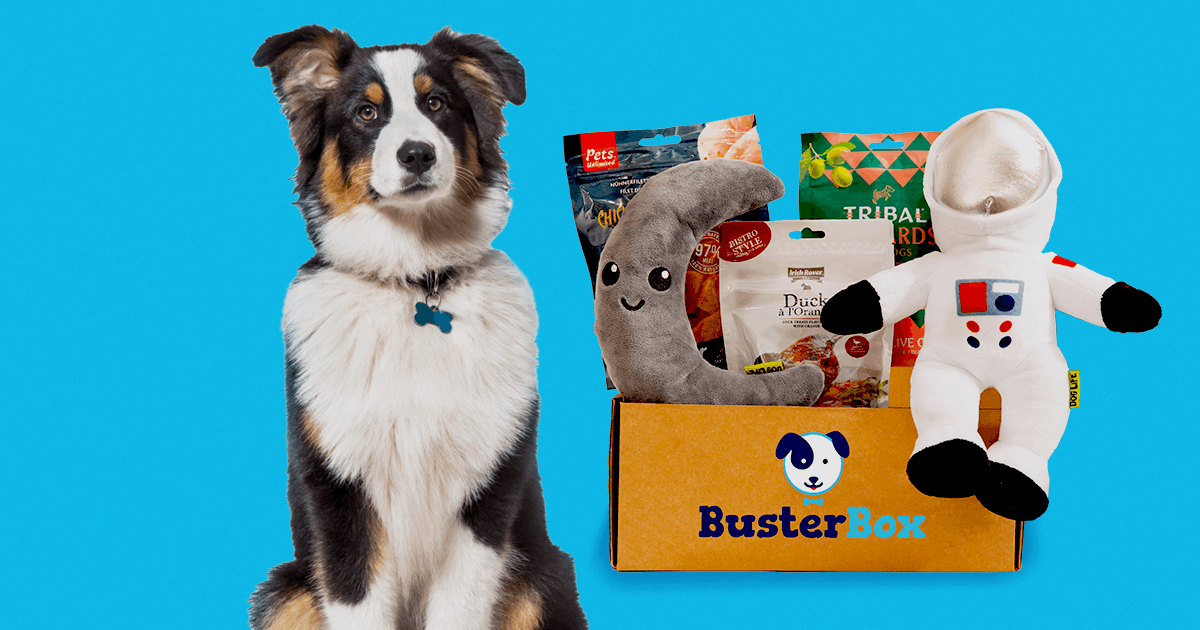
Subbly customer BusterBox started as a side hustle run by dog lovers. They shipped just 12 boxes in their first month.
A few years later, they had thousands of subscribers and had left their day jobs behind.
Their subscription model gave them predictable inventory planning and cash flow, making growth manageable.
It shows that a focused pet supply business can scale beyond a home setup when the model is right.
7 Steps to Start Selling Pet Products From Home
The pet supplies market is ripe for someone passionate about pets to start a successful business. But where should you begin?
This section provides step-by-step guidance on building a pet supplies brand from scratch.
1. Choose your niche and validate demand
Before you build a website or start talking to suppliers, it’s a good idea to choose a handful of products to focus on.
As mentioned in the previous section, “pet supplies” covers a lot. If you try to sell all of it from day one, you’ll blend in with every other generic pet store online.
New brands grow faster when they focus.
Instead of launching a broad “pet shop,” narrow your angle. You might focus on:
- Healthy dog treats made with limited ingredients
- Enrichment toys for indoor cats
- Supplements for senior pets
- Eco-friendly grooming products
- Starter kits for new puppy owners
Specific stores are easier to brand, market, and build trust with. When customers instantly understand who you serve and what you specialize in, conversions improve.
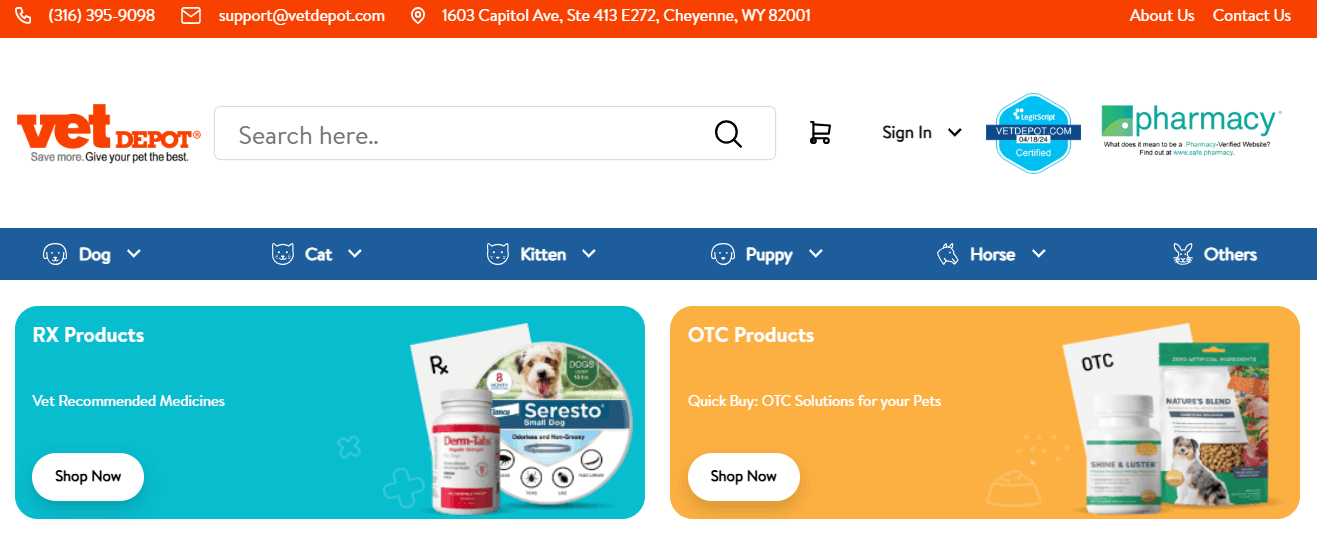
VetDepot is a good example of this. It focuses on medications and health products sourced from established brands.
That clear positioning helps it attract a specific type of customer and compete without trying to match the breadth of big-box pet retailers.
Focus on in-demand products
If you’re not sure which products to focus on, start with categories that already have steady demand.
Food and treats account for the largest share of U.S. pet industry spending. That tells you something important: essentials drive consistent sales.
Here are product categories that regularly perform well online:
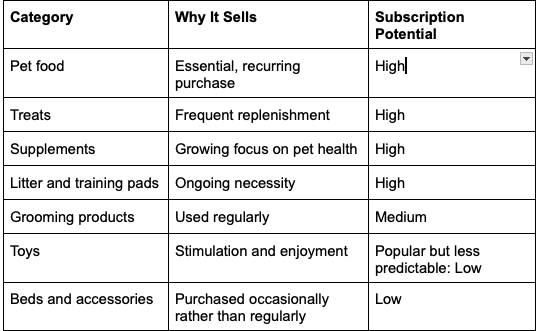
Notice the difference between consumables and accessories. Food, treats, litter, and supplements are used up. That means customers come back.
Look beyond demand: Think repeat purchases
A product can be popular and still not be ideal for a home-based business.
Ask yourself:
- Will customers need this every month?
- Can I realistically ship this from home?
- Are margins strong enough after shipping costs?
Consumable products tend to work best because they create natural reorder cycles. That makes revenue more predictable and opens the door to subscription models later on.
Study the competition
Finally, take a look at companies already selling your chosen products online, specifically their:
- Pricing
- Positioning
- Packaging
- Customer reviews
Are there gaps? Maybe competitors focus on premium pricing but ignore budget-conscious buyers. Maybe there’s demand for breed-specific products that no one is specializing in.
You don’t need to invent something completely new. You need a clear niche with steady demand and room to differentiate.
2. Choose your business model
Once you know what you’re selling, decide how you’re going to sell it.
Your business model affects your startup costs, margins, and the level of control you have over operations.
Here are some typical business models used for selling pet products online:
Wholesale and holding inventory
This is the traditional ecommerce model. You buy products in bulk from suppliers, store them yourself, and ship orders directly to customers.
Pros:
- Higher margins if you buy at strong wholesale rates
- Full control over branding, packaging, and bundles
- Easier to create curated kits or subscription boxes
Tradeoffs:
- Upfront investment in stock
- Storage space required
- Risk of unsold inventory
Dropshipping
With dropshipping, you list products in your store, but a supplier handles storage and shipping.
Pros:
- Low startup cost
- No need to manage inventory
- Easy to test product ideas
Tradeoffs:
- Lower margins
- Less control over shipping speed and quality
- Harder to differentiate if competitors use the same suppliers
Print-on-demand
Print-on-demand is when a product is made only after a customer orders it. This works well for custom pet apparel or accessories—for example, a bandana with your dog’s name on it.
Usually, you provide branding and artwork to a third-party manufacturer, which then handles production and fulfillment on your behalf.
Pros:
- No inventory
- Unique, branded designs
Tradeoffs:
- Higher per-item cost
- Slower fulfillment
Subscription model
The subscription business model is especially well-suited to consumables such as food, treats, litter, and supplements. Customers receive products on a schedule, which creates predictable revenue.
Pros:
- Recurring income
- Higher customer lifetime value
- Better inventory forecasting
Tradeoffs:
- Requires a good retention strategy
- Needs reliable recurring billing infrastructure
To find the right model for your business, you’ll need to consider your budget, product type, and long-term goals. For more information, check out our guide on writing a subscription box business plan.
3. Register your business and handle compliance
Before you start selling, make sure your business is properly set up. This involves ensuring you have the right structure and complying with laws and regulations.
Choose a legal structure
Most home-based ecommerce businesses start as either a sole proprietorship or a limited liability company (LLC).
An LLC is often preferred because it separates your personal assets from your business liabilities. It also tends to look more professional when working with suppliers or payment providers.
The right structure depends on your state and long-term plans, but the key is to register properly rather than operating informally.
Obtain required business licenses
Even if you run the business from home, you may need:
- A general business license from your city or county
- A home occupation permit, depending on local zoning rules
Requirements vary by state and municipality, so check your local government website.
Apply for a sales tax permit
If you sell physical pet supplies, you will usually need a sales tax permit (sometimes called a seller’s permit).
This allows you to collect and remit sales tax in states where you have tax obligations. Most states require this before you begin selling.
Understand pet food and supplement regulations
If you plan to sell pet food or supplements, compliance becomes more important.
The Food and Drug Administration (FDA) regulates pet food safety and labeling at the federal level. Products must meet labeling standards and safety requirements.
In addition, individual states often require that pet food and treats be registered before they can be sold within the state. Many states follow model guidelines developed by the Association of American Feed Control Officials (AAFCO).
If you’re reselling established brands, much of this compliance will already be handled by the manufacturer. But if you create your own formulations or private-label products, registration and labeling rules apply.
Getting these basics right protects your business and builds trust with customers from the start.
4. Source products and set your pricing
This stage involves finding suppliers and setting prices that leave room for sustainable profit.
Find reliable suppliers
Choose suppliers that specialize in your niche and can deliver consistent quality. For wholesale, look for stable inventory, reasonable minimum order quantities, and predictable fulfillment times.
For dropshipping, prioritize partners with transparent shipping speeds and clear return policies.
Always order samples before committing. Check product quality, packaging, and delivery time yourself.
Calculate margins
Before setting prices, calculate your true cost per product:
- Cost of goods sold
- Payment processing fees
- Platform fees
- Packaging costs
Your margin must cover these and still leave room for marketing and overhead.
Factor in shipping and packaging
Shipping can dramatically impact profitability, especially for heavy items like food or litter.
Consider weight, parcel size, and carrier rates.
Branded packaging can strengthen your store, but it should not unnecessarily inflate costs.
Plan subscription discounts
If you plan to offer recurring deliveries, build subscription pricing into your calculations from the start. Consumables work best. A modest discount can increase signups, but it must still protect long-term margins.
Price for long-term profitability
Research competitor pricing to understand expectations, but avoid competing purely on price.
Sustainable pricing reflects your costs, positioning, and customer value. The goal is steady profit, not short-term sales volume.
5. Build your online store and choose an ecommerce platform
Your website isn’t just where you list products. It’s where customers discover you, evaluate you, buy from you, and interact with your brand. It processes payments, manages orders, stores customer data, and often handles ongoing communication.
If it doesn’t work properly, your business won’t either.
This section explains how to choose the right platform.
Basic functions to look for in an ecommerce platform
At a minimum, your ecommerce platform should handle:
- Secure payments
- Mobile-friendly checkout
- Clear product pages
- Inventory tracking
If you plan to sell consumables on repeat, it also needs to support:
- Recurring billing
- Flexible delivery intervals
- Customer self-service (pause, skip, update payment)
- Failed payment recovery
Without these, managing subscriptions quickly becomes manual and time-consuming.
Challenges of selling subscriptions on generic platforms
Many general ecommerce platforms were built for one-time purchases, and subscriptions often have to be added through third-party apps.
That can create:
- Extra monthly plugin costs
- Complex integrations
- Data spread across multiple systems
- Limited control over subscription logic
When you are handling a small number of orders, this might not be a big issue. But as your business scales, these challenges will have a cumulative impact.
They will make your business less efficient, and profitability and customer satisfaction will suffer.
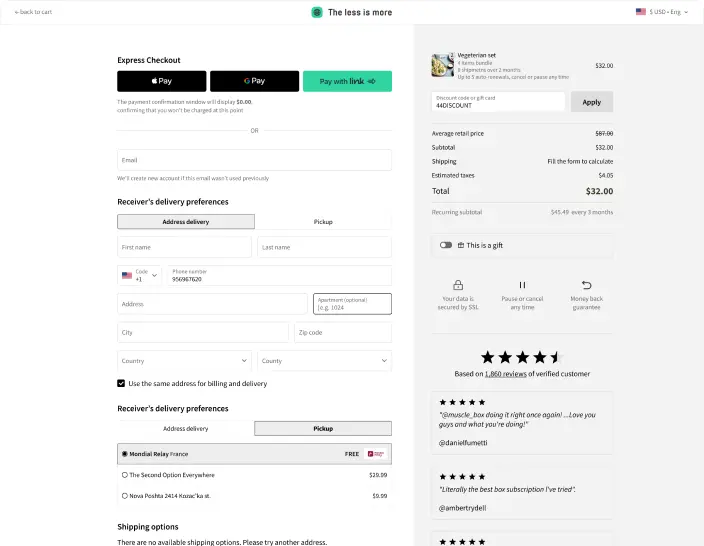
The solution is to use a subscription-first platform like Subbly. It includes everything you need to sell subscriptions built in from day one, including recurring billing, customer portals, flexible rules, and reporting. This reduces technical friction and makes scaling easier.
6. Plan fulfillment and shipping
In pet supplies, customers rely on timely delivery—especially for essentials like food, treats, and supplements.
This makes shipping and fulfillment critical. Here are a few tips for getting it right:
Self-fulfillment vs third-party logistics
Many home-based businesses begin with self-fulfillment. You store inventory at home, pack orders yourself, and manage shipping directly. This keeps costs low and gives you control in the early stages.
As order volume grows, you may outgrow your space or your time. A third-party logistics provider (3PL) can handle warehousing, picking, packing, and returns.
This adds cost, but it improves scalability and frees you to focus on marketing and growth.
Packaging, storage, and shipping
Fulfillment in the pet category comes down to reliability. Customers are often buying products their pets rely on, and even non-essential items are expected to arrive quickly and intact. When delivery is consistent, trust grows. When it isn’t, customers look elsewhere.
Here are some tips for achieving this:
- Plan your storage: If you sell food or supplements, you need to manage your inventory by setting up stock rotation and expiry tracking.
- Calculate shipping early: Heavy items like pet food increase delivery costs, so your pricing and shipping strategy must account for weight. Whether you offer flat-rate shipping, free shipping thresholds, or paid expedited delivery, customers expect clear timelines and consistent service.
- Plan subscription delivery cycles: If you plan to sell subscriptions, prepare for scheduled deliveries. That predictability makes inventory planning easier and helps ensure customers never run out of essential supplies.
7. Market your store and drive repeat sales
Launching your store is only the start. You need consistent traffic and a plan to keep customers coming back.
At launch, focus your subscription box marketing on simple channels:
- SEO-optimized product pages
- Pet-focused social media content
- Micro-influencer partnerships
- A first-order discount to reduce friction
Once you make your first sales, shift attention to retention. Email reminders, subscription options, loyalty incentives, and bundle offers all encourage repeat purchases.
Dog food manufacturer The Farmer’s Dog is a good example of how pet brands use social media effectively.
Instead of just posting product photos, the company shares emotional, story-driven content that resonates with pet owners.
Campaigns like its Super Bowl ad were repurposed across social platforms, generating strong engagement and brand awareness.
The lesson isn’t to copy big-budget campaigns. It’s to understand your audience. Pet owners respond to relatable, authentic content. If your marketing reflects how much people care about their animals, engagement follows.
Turn Your Passion for Pets Into a Scalable Subscription Business
If you’re thinking about selling pet supplies from home, chances are it started with your love for animals.
That passion is powerful. With the right niche, business model, and infrastructure, it can become a sustainable online business.
If subscriptions are part of your plan, your platform matters. Subbly is designed specifically for recurring ecommerce, with flexible billing, automated renewals, and customer self-management included from day one.
Start your pet supply business on a subscription-first foundation. Sign up for a free trial and see how Subbly can support your growth.


