
Why Sell Wine Online?
The way people buy wine is changing fast. Consumers are moving away from supermarket shelves and toward buying directly from wineries and boutique retailers.
A recent survey found that 72% of total winery sales now come from DTC channels, with a growing share generated online.
This shift is part of a wider trend across the beverage alcohol industry. The global alcohol e-commerce market is expected to reach nearly $140 billion by 2029, expanding at a CAGR of more than 17%.
Wine leads that growth, accounting for 62% of online alcohol sales in the United States, well ahead of beer or spirits.
Platforms like Vivino, Naked Wines, and Wine.com have built loyal followings by combining expert recommendations with personalized shopping experiences.
They make discovering new wines as easy as scrolling a feed, and customers love the convenience of having curated bottles delivered to their door.
Because wine is consumed regularly and lends itself to discovery, it’s also ideal for subscription retail models.
The global wine subscription market was valued at $12.4 billion in 2025 and is set to nearly triple by 2035.
For entrepreneurs, that means selling wine online isn’t just an opportunity, it’s a chance to build long-term, recurring revenue around a product people never tire of enjoying.
How to Sell Wine Online in 7 Steps
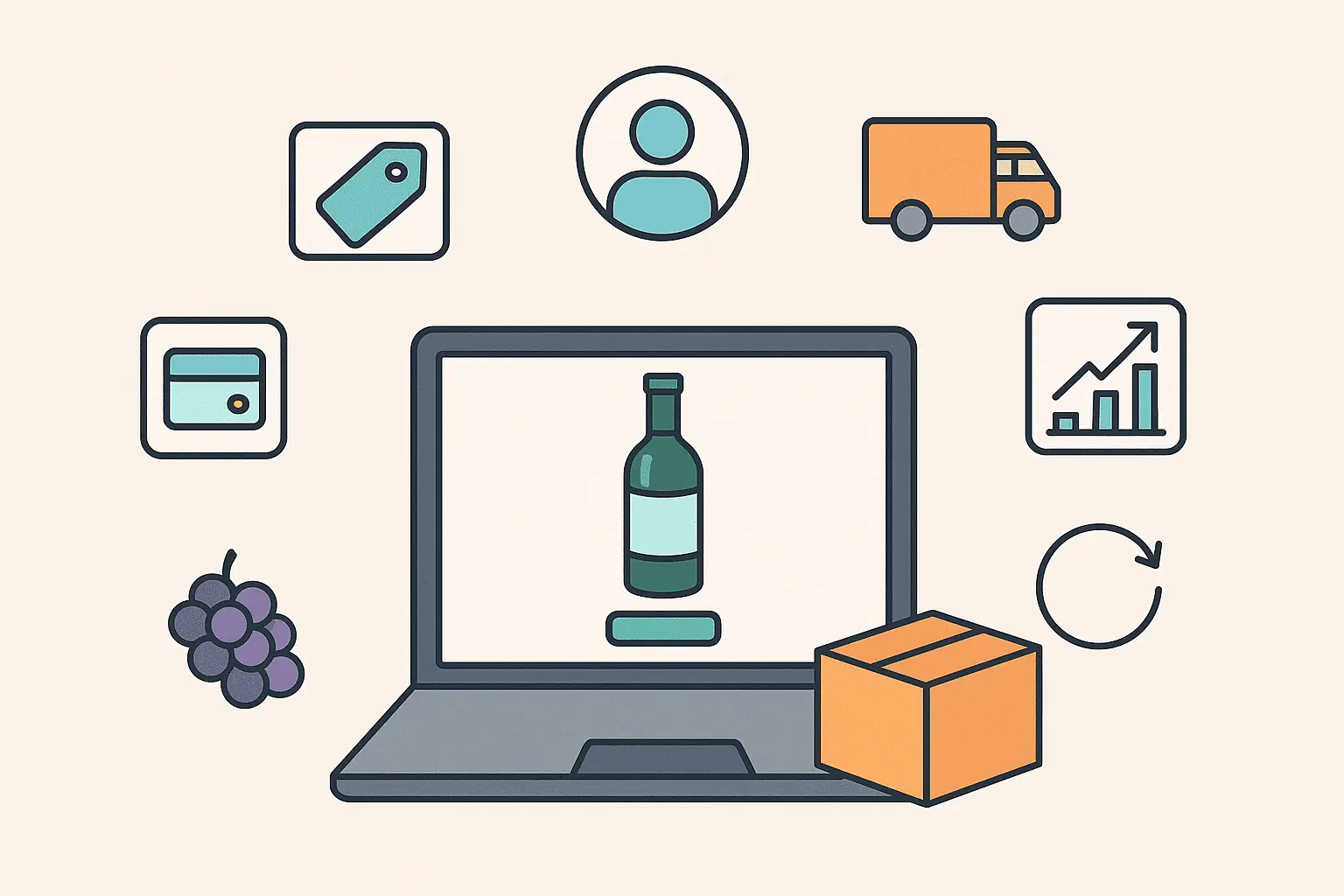
Selling wine online combines the passion for wine and winemaking with the precision of e-commerce.
Whether you’re a vineyard owner, retailer, or entrepreneur, success depends on balancing storytelling, logistics, and legal compliance.
The following seven steps guide you through the process, from securing the right licenses to creating a subscription-ready website that keeps customers coming back.
1. Learn the legal requirements for selling wine online
Selling wine online is more complicated than selling T-shirts or coffee. Because alcohol is tightly regulated, you’ll need to follow specific laws for licensing, age verification, and delivery.
The process looks different depending on where you’re based; the United States, the United Kingdom, and the European Union each have their own rules.
Here’s what you’ll need to know before your first sale.
Selling wine online in the United States
Start by applying for a federal alcohol permit through the Alcohol and Tobacco Tax and Trade Bureau (TTB).
This agency regulates how wine is made, sold, and labeled in the U.S. You’ll need approval from the TTB before you can legally produce or distribute alcohol, and your wine labels must also meet federal labelling requirements.
Next, look at your state’s DTC shipping rules using the Wine Institute’s DTC map.
Before you can legally ship wine to customers, you’ll likely need:
- An alcohol license.
- State-level shipping permits.
Selling wine online in the United Kingdom
In the U.K., you’ll need both a Personal License and a Premises License under the Licensing Act 2003.
These ensure you’re authorized to sell alcohol both online and from your registered location.
You must also follow the Challenge 25 policy: anyone who appears under 25 must verify their age before purchase.
If you sell to other businesses, you’ll need to join the Alcohol Wholesaler Registration Scheme (AWRS).
Make sure your store complies with Distance Selling Regulations.
These include providing clear:
- Pricing.
- Refund policies.
- Delivery timelines.
Selling wine online in Europe
If you plan to sell to E.U. customers, you’ll need to follow the EU Excise Duty and Alcohol Directive (2008/118/EC), which covers alcohol taxation and transport rules between member states.
You’ll also need to pay excise duty in the buyer’s country and follow distance-selling VAT rules.
Some countries, like France, Italy, and Spain, require additional local permits for online alcohol sales.
Because age-verification laws differ, always check with each country’s customs or excise authority before shipping.
2. Define your niche and product offering
Before you start designing your website or choosing a fulfillment partner, you’ll need to define what kind of wine business you want to run.
This helps you target the right audience, create focused marketing messages, and build a strong brand identity from day one.
There are three main types of wine businesses:
- Reseller or retailer: You source bottles from established distributors or importers and resell them online. This approach gives you flexibility and variety, but lower margins.
- Own label or private brand: You work with winemakers to produce and label your own wines. It requires more upfront investment but offers full control over pricing, design, and positioning.
- Winery selling DTC: You produce your own wine and sell it straight to buyers online, maximizing profit margins and customer loyalty.
Choose a niche
When choosing your niche, think about what makes your business different. Do you want to focus on organic or biodynamic wines, small-batch imports, luxury gift sets, or eco-friendly packaging?
Niche positioning not only helps you stand out but also attracts customers who share your values.
Choose your products
Next, refine your core product lineup. Start with popular varietals like Cabernet Sauvignon, Chardonnay, or Pinot Noir and regions your audience already trusts.
Then build curated collections. Examples may include:
- Wines under $25.
- European naturals.
- Weekend reds.
A good example is Scout & Cellar, which built its brand around “clean-crafted” wines free from synthetic additives.
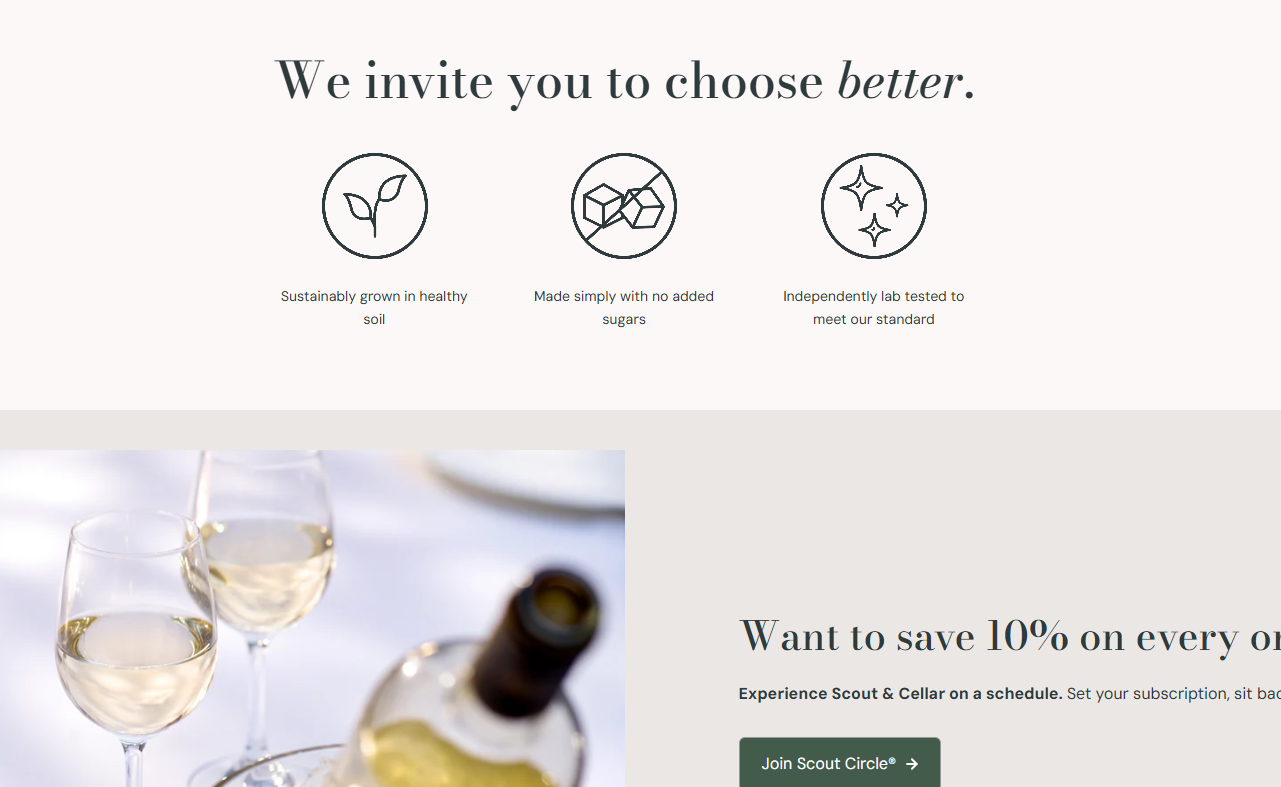
Its purpose resonates with health-conscious consumers and sets it apart from mainstream competitors.
Defining your niche early keeps your strategy focused and makes every future branding, marketing, and product decision easier.
3. Create your brand
Your brand is more than a logo or label; it’s the story, voice, and visuals that make customers connect with your wines.
There are four main areas to consider when creating a new brand, including:
Define your brand narrative
Start by defining your brand name, story, and tone of voice. Think about what you want people to feel when they see your bottles or visit your website.
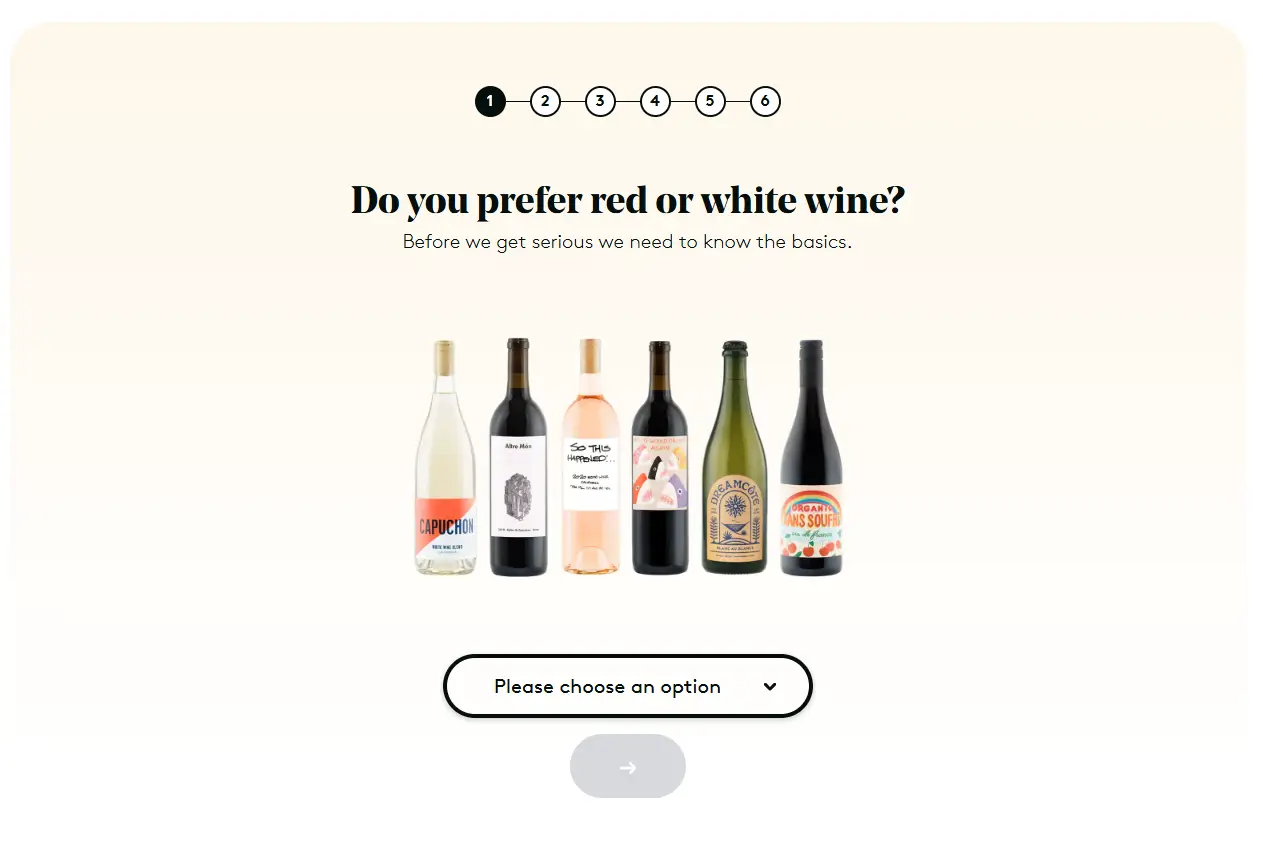
A friendly, conversational tone can make wine more approachable. For example, Winc uses a short palate quiz that recommends wines based on taste preferences. This makes customers feel understood from the first click.
Create a visual identity
Your visual identity should match your brand story. Invest in clean, high-quality bottle photography and a cohesive color palette.
For example, Naked Wines’ storytelling-led visuals create a sense of trust and sophistication.

Use consistent imagery across your website, packaging, and social media so that customers recognize your brand instantly.
Plan the unboxing experience
The way your wine arrives can leave a lasting impression. Brands like Empathy Wines and Winc elevate packaging with branded boxes, tasting note inserts, and pairing guides.
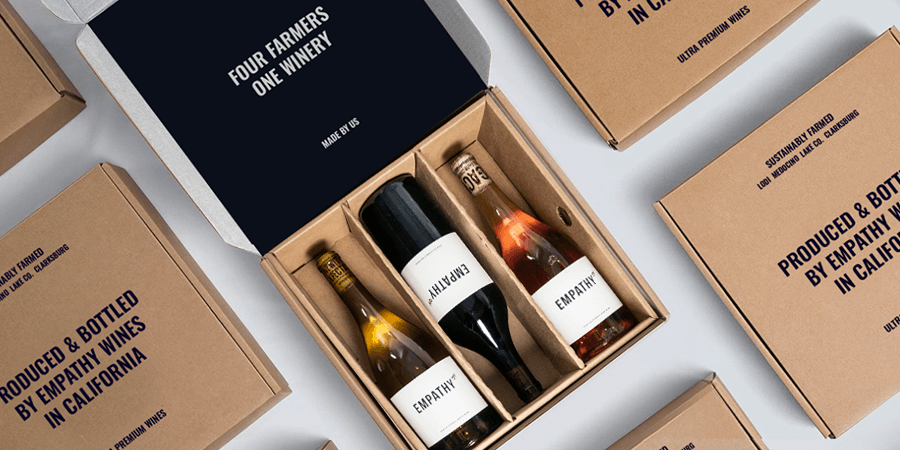
Even simple touches like eco-friendly materials or a thank-you note can make customers feel valued and encourage them to share their experience online.
Build trust
Online shoppers want assurance that their purchase is authentic and will arrive safely.
Be transparent about where your wines come from, include clear delivery timelines, and use reliable couriers with tracking.
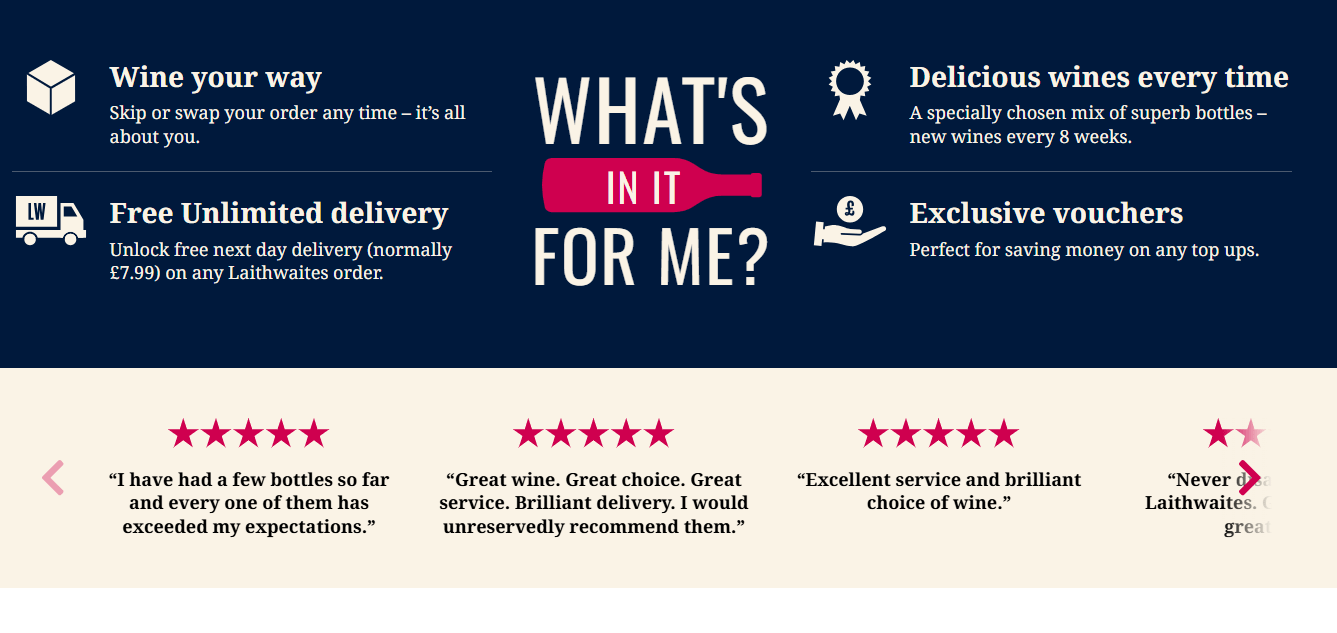
Show customer reviews and communicate openly; honesty is your best marketing tool. For example, Laithwaites lists the benefits of purchasing its wine subscriptions and proudly shows off customer reviews.
4. Build your wine e-commerce website
Your website is the heart of your online wine business. It’s where customers discover your story, explore your bottles, and ultimately decide to buy.
A well-designed site:
- Looks good.
- Builds trust.
- Streamlines the checkout process.
- Ensures compliance with alcohol regulations.
Create detailed product pages: Each wine should have detailed tasting notes, vineyard background, and suggested food pairings.
Include rich imagery, bottle shots, close-ups of labels, and lifestyle photos that capture the experience behind every pour.
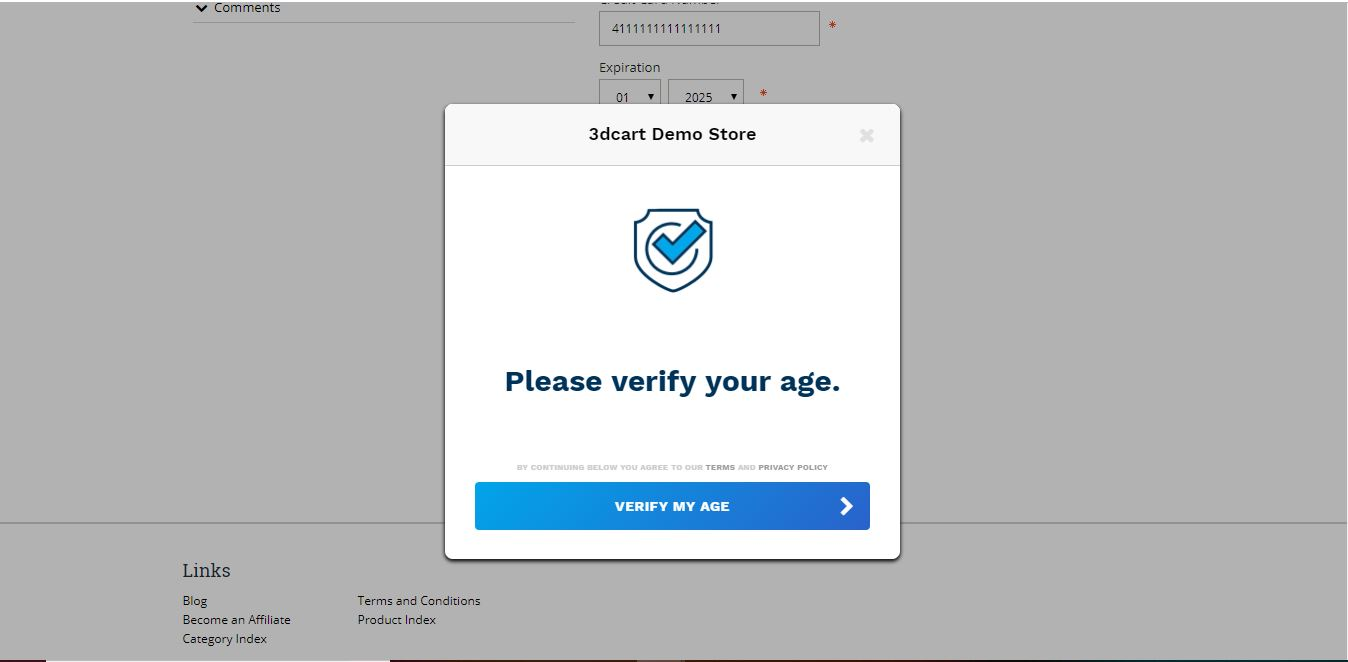
Use age verification tools: Since you’re selling an age-restricted product, install an age verification pop-up that appears before visitors can browse your catalog. Tools like BlueCheck help confirm buyers are 21 or older.
Ensure an efficient checkout process: Checkout should be fast, secure, and transparent. Payment processors like Corepay specialize in supporting high-risk industries like alcohol.
Clearly display your delivery options and tracking policies. The more reassurance you provide upfront, the fewer abandoned carts you’ll face later.
For more best practices on optimizing your online store, see our guide on how to create a subscription website. It explains how to convert visitors into long-term customers.
5. Add subscriptions to your wine store
Another consideration when setting up your online presence is whether you want to sell wine on subscription.
Subscriptions make perfect sense for wine businesses. Customers already buy wine regularly, and a subscription model turns that behavior into predictable, recurring revenue.
It also helps build loyalty; subscribers become part of a community that trusts your recommendations and looks forward to each delivery.
There are several ways to offer wine subscriptions:
- Wine club memberships: Customers receive curated selections each month or quarter.
- Build-your-own boxes: Let subscribers choose bottles that match their taste and budget.
- Discovery boxes: Surprise them with new varietals, regions, or limited releases.
However, subscription transactions tend to be more complex than standard ecommerce purchases. To make this work online, your website needs to support features like:
- Recurring billing.
- Flexible shipping.
- Checkout systems for both subscriptions and one-time purchases.
While platforms like Shopify or WooCommerce can handle this, they often require third-party integrations to manage renewals, taxes, and compliance.
Managing all of these plugins can quickly become complex. They also often don’t integrate and are unreliable.
That’s where Subbly comes in.
Subbly is a subscription-first e-commerce platform, purpose-built for businesses that rely on recurring orders. It includes:
- Built-in recurring billing for flexible delivery intervals.
- Age-gated checkout for alcohol compliance.
- Integrated analytics to track retention and lifetime value.
- Flexible shipping tools to manage regional delivery restrictions.
And with Subbly’s AI Website Builder, you can launch a professional, subscription-ready store in a fraction of the time it takes for a person to code it.
It automatically generates on-brand layouts, product pages, and copy, so you can focus on curating wines instead of coding or managing developers.
Brands like VinoMojo have used Subbly to create sleek, conversion-ready wine subscription stores.
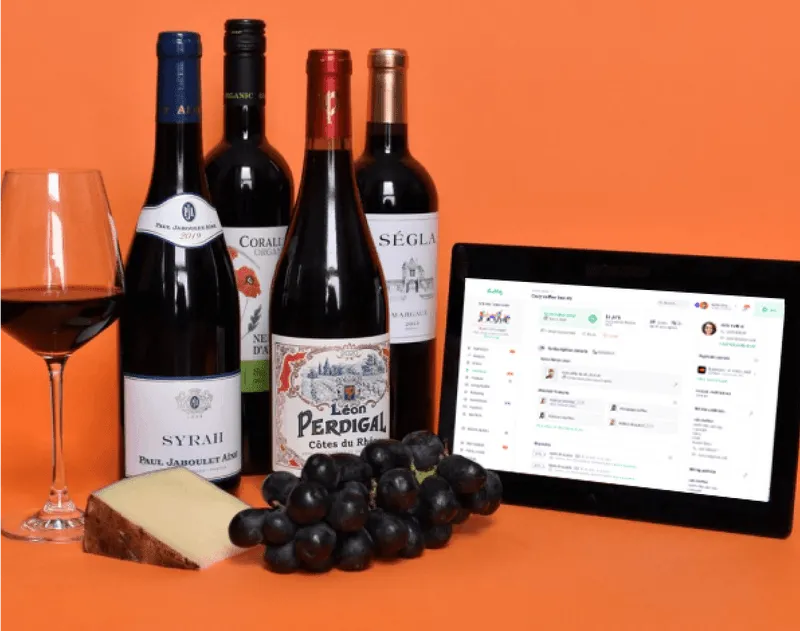
If your goal is to grow consistent revenue while offering a memorable customer experience, a subscription-first setup with Subbly is the simplest path to get there.
If you want to learn about structuring your business around recurring revenue, read our guide to launching a DTC subscription business. It explains how to combine direct-to-consumer sales with subscriptions for long-term growth.
6. Plan your logistics and fulfillment
When selling fine wine online, your logistics can make or break the customer experience.
Wine is delicate; it needs careful storage, secure packaging, and temperature-controlled transport to arrive in perfect condition.
Here are some factors you’ll need to consider:
Storage and packaging
Wine should be kept between 10°C and 20°C (50–68°F) to prevent spoilage during transit.
Many successful online wine retailers, such as Wine.com, use climate-controlled warehouses and packaging designed to protect bottles from heat, cold, and impact damage.
Use molded pulp or foam inserts to hold each bottle and prevent breakage.
Consider your shipping partners
There are a range of options for shipping partners depending on where in the world you are based.
In the U.S., alcohol shipping is subject to strict regulations, so choose reliable couriers like UPS or FedEx.
Both carriers support alcohol delivery but require proper licensing, packaging, and an adult signature upon delivery.
The U.S. Postal Service is prohibited from shipping alcohol.
To simplify compliance, consider platforms like Commerce7 or Vinoshipper, which help manage licenses, age checks, and taxes across different states.
In the U.K., most couriers, including Royal Mail and DPD, allow alcohol shipments as long as the package is secure and the recipient is over 18. DPD even offers an “Age Verified” service for added peace of mind.
In Europe, cross-border compliance services like Vinoshipper Europe or DPD Food can help with documentation, taxation, and shipping restrictions.
To keep costs manageable, many retailers offer flat-rate or bulk shipping options. For instance, Wine.com offers tiered flat-rate pricing that encourages customers to buy more, lowering per-bottle shipping costs while maintaining profitability.
You could apply a similar strategy, such as free shipping for cases or subscriptions over a certain value.
Prioritize transparency and tracking
Customers appreciate knowing when their order will arrive and how it’s being handled. Ensure your shipping partner offers an easy-to-use tracking system. Clear communication and reliable delivery are key to repeat business. People are more likely to buy from you if they trust that their wine will arrive safely and on time.
7. Market your wine business
Once your store is live, marketing becomes the key to turning casual visitors into loyal customers
Fine wine is a sensory product; people don’t just buy it, they buy the story, the experience, and the connection to the vineyard.
Here are some channels and techniques that work well for wine marketing:
Storytelling
Use your website and blog to share vineyard insights, updates and company history that capture the atmosphere of your brand.
For example, Jordan Winery uses storytelling to highlight its many charitable endeavors. The Instagram video below shows them supporting dog rescue charity Compassion Without Borders.
This kind of content shows customers that they aren’t just investing in quality wines; they’re also helping to make the world a better place.

Video
93% of marketers report that video marketing has given them a good return on investment (ROI).
Video is a great way to build authenticity through trust. Gary Vaynerchuk’s Wine Library TV is an excellent example. In the videos, he samples the latest wines and shares his opinion.
Gary’s personality, knowledge, passion, and honesty all come across. Viewers enjoy hearing his opinions and trust his judgment, which makes it more likely that they will buy wine from his company.

Email marketing
This is one of the most effective tools for nurturing relationships. Send newsletters that feature new vintages, seasonal offers, or tasting guides.
You can also set up automated sequences that welcome new subscribers, remind them when it’s time for a refill, or reward long-term members with exclusive access to limited releases.
To learn more about creating a complete subscription marketing plan, read our guide How to Build a Working Subscription Marketing Strategy.
Paid social media ads
These are great for reaching wine enthusiasts, particularly on Instagram, where visuals drive discovery. Make sure your ads comply with 21+ audience restrictions. We recommend using the video or carousel formats to showcase the people and places behind each bottle.
Influencer partnerships
Collaborate with sommeliers or lifestyle creators who already have a trusted audience. Encourage them to post unboxing videos or live tastings to show your wines in context.
Referral and loyalty programs
These help retain subscribers. Offer points or discounts for subscribers who refer friends, or exclusive perks for milestone renewals.
Keep customers coming back with Subbly
Selling wine online is about building relationships that last. Subscriptions make that possible, turning one-off purchases into predictable, recurring revenue while deepening customer loyalty.
With the right platform, managing those relationships becomes effortless. That’s where Subbly comes in.
As a subscription-first platform, Subbly streamlines every part of your customer journey, from recurring billing and flexible delivery options to automated retention tools.
You can set custom subscription intervals, send refill reminders, and offer tailored upsells to boost average order value.
Built-in analytics let you track churn, lifetime value, and renewal rates, helping you understand what keeps customers loyal and where to improve.
Automated email flows and cancellation surveys make it easier to re-engage subscribers and reduce drop-offs.
With everything under one roof, including age-gated checkout, powerful integrations, and AI website tools, Subbly gives you the infrastructure to grow sustainably while keeping your customers delighted.
Start your free Subbly trial today and see how simple it is to sell wine subscriptions online.


