
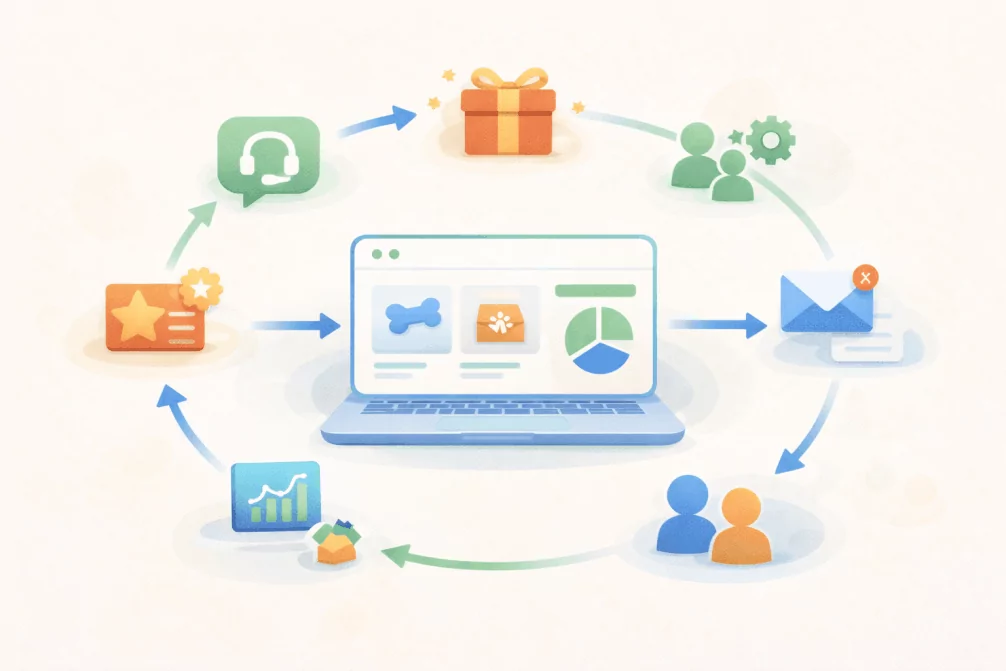
Why Subscription Retention Strategies Matter
Retention shapes the economics of your subscription business.
When churn is high, you must constantly replace lost subscribers just to maintain revenue. That makes growth harder, increases marketing spend, and reduces profitability.
This section explains how small improvements in retention can disproportionately benefit your business.
High churn increases acquisition pressure
Acquiring a new customer can cost 5–7 times as much as retaining an existing one.
If customers leave quickly, you must continually invest in paid ads and promotions simply to replace lost revenue.
That increases customer acquisition cost (CAC) and extends your payback period. Instead of investing to grow, you invest to recover.
Churn destabilizes recurring revenue
In many businesses, up to 65% of revenue comes from existing customers rather than new ones.
When retention is strong, monthly recurring revenue becomes predictable. Forecasting improves. Planning becomes easier. When churn rises, revenue becomes volatile.
Retention drives net growth efficiency
When churn is low, a higher percentage of new signups translates into net subscriber growth.
For example, if you acquire 1,000 customers and lose 900, growth stalls. If you lose 300 instead, growth accelerates.
The same acquisition engine produces very different outcomes depending on retention.
Retention determines whether acquisition drives expansion or simply replaces it.
Churn affects payback period
Churn also determines how quickly you recover customer acquisition costs. If the cost of acquiring each customer is $300 and a subscriber generates $100 per month, your business will recoup the cost in three months.
But if the average subscriber cancels after two months, you never recover that acquisition cost.
High churn forces you to lower CAC, increase prices, or accept thinner margins. Sustained retention protects profitability.
The Two Types of Churn Every Subscription Business Must Understand
Before you improve retention, you need to understand why subscribers leave.
Not all churn is the same. Broadly, it falls into two categories: voluntary and involuntary. Each has different causes and requires different strategies.
Voluntary churn
Voluntary churn occurs when a customer chooses to cancel.
This is usually driven by one of four factors:
- Subscription fatigue: Subscribers feel overwhelmed by recurring charges, often because they are managing multiple subscriptions at once.
- Pricing dissatisfaction: This occurs when customers no longer perceive sufficient value relative to the cost.
- Poor product–market fit: Poor fit often stems from weak onboarding or unclear positioning.
- A better alternative: In competitive verticals, substitutes are always available.
Voluntary churn requires experience-driven solutions, like:
- Better onboarding
- Clearer value communication
- Pricing optimization
- Personalization
- Loyalty incentives
Involuntary churn
Involuntary churn is different. The customer does not intend to cancel. Instead, the subscription often ends because a payment fails.
Common causes include:
- Expired cards
- Lost or replaced cards
- Insufficient funds
- Payment processing issues
In many subscription businesses, involuntary churn accounts for a significant share of total churn.
The subscriber may still value the product, but never completes the renewal process.
Dealing with involuntary churn requires operational solutions, like:
- An effective dunning process: A structured system for recovering failed payments through intelligent retries and clear customer communication.
- Automated retry logic: Technology that re-attempts failed payments at optimized intervals based on historical success patterns.
Frictionless payment updates: Making it simple for customers to securely update billing details without login barriers or unnecessary steps.
How to Measure Retention Performance
Retention is measurable, and improving it involves tracking the right metrics and understanding how they interact.
Below are the key performance indicators (KPIs) every subscription business should monitor.
Churn rate
Churn rate measures the percentage of subscribers who cancel during a given period. It shows how much of your base you are losing.
Churn rate = (Cancellations ÷ Subscribers at start of period) × 100
Retention rate
Retention rate measures the percentage of existing subscribers who stay with you over a defined period.
Retention rate = [(Customers at end – New customers acquired) ÷ Customers at start] × 100
Tracking retention separately from new acquisition tells you whether your product and experience are strong enough to keep customers, not just attract them.
Churn MRR
This measures the monthly recurring revenue (MRR) lost to churn. This is important because if high-value subscribers leave, churn MRR may spike even if customer churn appears moderate.
Customer lifetime value
Customer lifetime value (CLV) estimates total revenue generated per subscriber.
You can calculate it by comparing average revenue per customer (ARPU) with your churn rate:
CLV = ARPU ÷ churn rate (decimal form)
Lower subscription churn immediately increases CLV.
Quick ratio
The quick ratio measures growth efficiency.
Quick ratio = (New MRR + Expansion MRR) ÷ (Churned MRR + Downgraded MRR)
A ratio above 1 indicates growth. The higher it is, the healthier your expansion relative to losses.
CAC payback period
CAC payback measures how long it takes to recover the acquisition cost.
Payback period = CAC ÷ Monthly contribution margin
If churn is high, customers may cancel before payback occurs.
11 Effective Subscription Retention Strategies
Retention is the result of decisions made at every stage of the subscription lifecycle, from onboarding to renewal and re-engagement.
The most effective retention strategies follow the customer journey. They reduce friction early, reinforce value over time, prevent avoidable revenue loss, and intervene before cancellations happen.
Below are 11 proven strategies, organized by lifecycle stage, that subscription-first businesses use to reduce churn and increase lifetime value.
1. Optimize onboarding to secure early retention
Churn risk is highest during the first 90 days of a subscription lifecycle, when expectations are still forming and value has not yet been fully realized.
This is usually caused by confusion, unmet expectations, or unclear value, rather than the price being too high.
Strong onboarding helps avoid this by:
- Reinforcing the value promise made during acquisition
- Guiding customers toward early success
- Reducing uncertainty and friction
If subscribers do not quickly understand how to use your product or what they are paying for, churn risk increases immediately.
Effective onboarding strategies may include:
- Clear welcome emails outlining next steps
- Simple setup guides or product walkthroughs
- Education on how to get the most value
- Setting realistic expectations around delivery or billing
The goal is to help the subscriber realize value as quickly as possible.
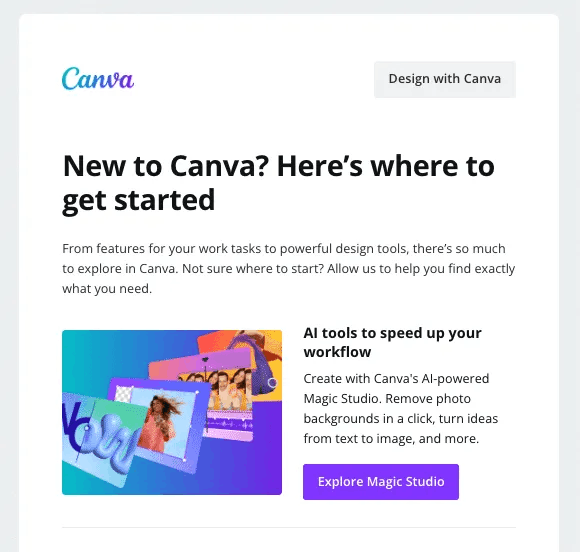
For example, Canva’s onboarding emails have used a “choose your own adventure” approach to personalize the experience.
Instead of sending generic tips, Canva asked new users what they want to create, whether that’s social posts, presentations, resumes, videos.
It then tailors follow-up content accordingly. This reduces overwhelm, shortens time-to-value, and helps users reach their first meaningful success quickly, a critical factor in reducing early churn.
2. Make It Easy for Customers to Manage Their Subscription
Most cancellations start with a small problem that the customer can’t easily solve.
This might include:
- Having too much of your product
- A delivery arriving at the wrong time
- A tight month financially
- A change in routine
These issues can all be overcome simply by allowing customers to make changes to their subscription.
But if they can’t do this quickly and easily, then they may think cancelling is the simplest solution.
This is why subscription management flexibility is a core retention strategy.
Subscribers should be able to:
- Skip a shipment
- Pause temporarily
- Change delivery frequency
- Swap products
- Upgrade or downgrade plans
- Update billing and shipping details
This reduces the pressure on customers at critical moments and makes it easy to stick with you.
A customer who can click “Skip this month” is far less likely to cancel than one who must email support and wait 48 hours for a reply.
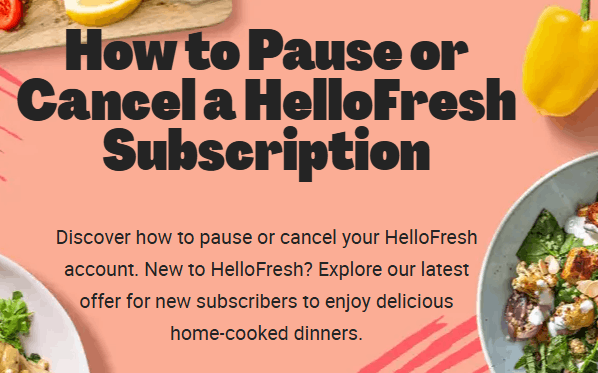
A good example is HelloFresh. It provides an online account dashboard and a mobile app that enable customers to skip deliveries, change meal selections, adjust serving sizes, update shipping details, or cancel their subscription without contacting support.
These changes can be made up to a weekly cutoff date, giving subscribers flexibility when plans change.
3. Turn cancellation moments into pause opportunities
Most subscription businesses treat cancellation as the end of the journey.
But the cancellation page is one of the highest-leverage retention points in your entire lifecycle.
If the only option presented is cancellation, you force the customer to permanently cancel their subscription. A smarter strategy is to intercept churn at this point.
Instead of a single “Confirm cancellation” button, offer alternatives:
- Pause for 30 or 60 days
- Skip the next delivery
- Extend the billing interval
- Downgrade to a lower tier
These options should appear after the customer is asked why they are leaving. If someone selects “Too much product,” show a pause or skip option. If they select “Too expensive,” offer a downgrade or temporary discount.
This approach reduces irreversible churn by reframing cancellations as adjustments.
To implement this, you need:
- Clear cancellation flows
- Reason capture
- Automated alternative offers
- Easy reactivation
The goal is to eliminate binary decisions; when cancellation is one of several options, customers are less likely to choose it.
4. Build flexible subscription plans that match real customer needs
Rigid subscription structures often fail because they prioritize operational convenience over customer needs.
Providing flexible subscription options enables customers to design their own plan that suits them perfectly.
You might provide options like:
- Multiple delivery frequencies
- Tiered product quantities
- Add-ons and build-your-own bundles
- Upgrade and downgrade paths
- Swap options within the same billing cycle
For example, a supplement subscription might allow customers to choose their dosage.
A coffee subscription could offer varying delivery frequencies depending on household consumption.
When a subscription closely matches customer behavior, perceived value increases. And when value perception remains high, voluntary churn decreases.
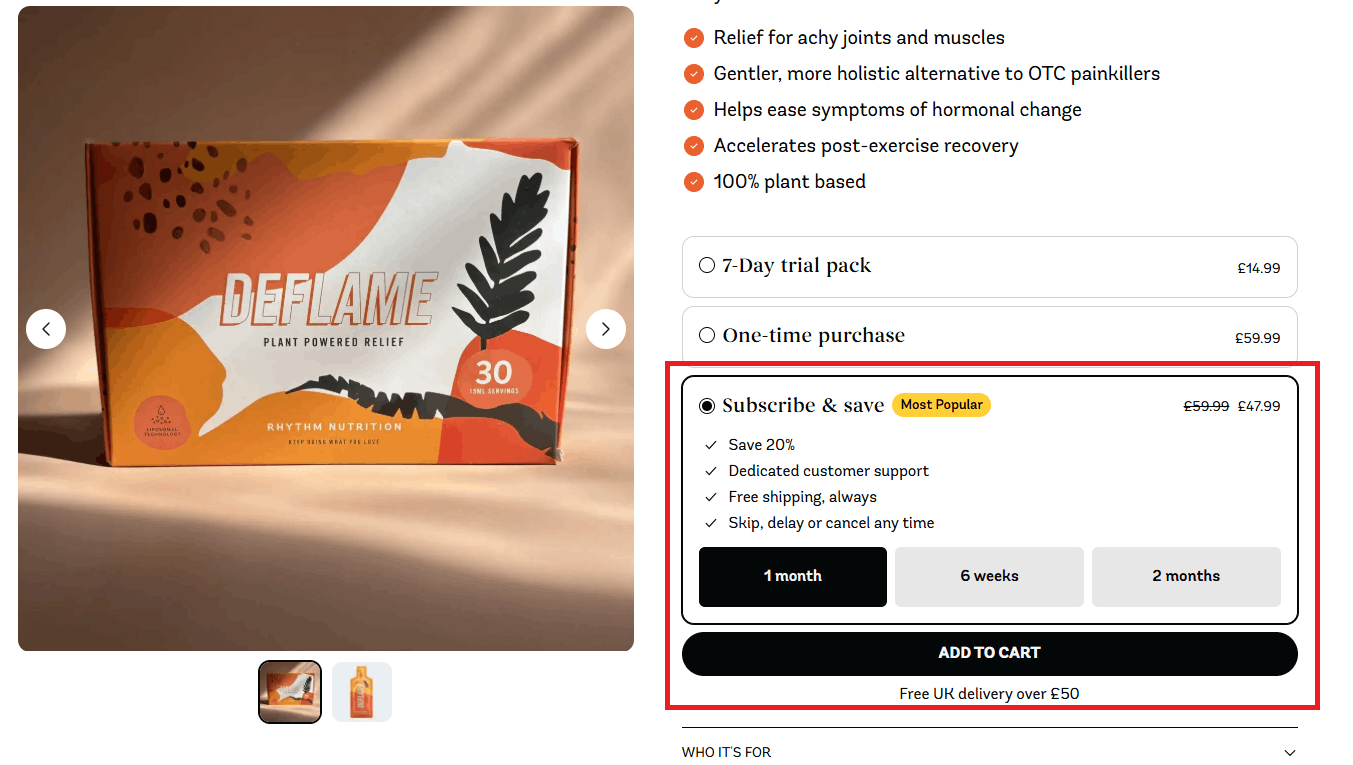
Supplements brand and Subbly customer Rhythm Nutrition allows subscribers to receive their subscription every month, every six weeks, or every two months. They can also choose how many packs they want in each delivery.
5. Use targeted retention offers instead of blanket discounts
When subscribers consider canceling, it’s important to understand the reason.
That’s because a price-sensitive customer requires a different response than someone dissatisfied with the product quality.
Sending the same generic discount to everyone weakens margins and rarely addresses the real issue.
Effective retention incentives should be based on the customer’s behavior, tenure, or the reason for cancellation.
For example:
- Long-term subscribers could receive loyalty-based incentives.
- High-value customers might be offered plan upgrades or exclusive access instead of discounts.
- Customers citing cost concerns could receive temporary price relief rather than permanent reductions.
- Subscribers who feel oversupplied could be offered frequency adjustments instead of financial incentives.
This approach protects pricing integrity while still reducing churn.
6. Build a loyalty program that rewards long-term subscribers
Your longest-tenured subscribers are usually your most profitable.
You have already recouped your acquisition cost on them, and they generate consistent, recurring revenue. Losing them has a disproportionate impact on lifetime value.
Yet many subscription businesses treat a 12-month subscriber the same as someone in month one.
A structured loyalty program allows you to reward these customers, encouraging them to spend more and stay with you longer.
According to research, 83% of consumers say belonging to a loyalty program influences their decision to buy again, and members typically generate 12–18% more revenue per year than non-members.
Loyalty bonuses might include:
- A free product after a set number of renewals
- Anniversary rewards
- Early access to new releases
- Subscriber-only perks
When subscribers see clear benefits tied to tenure, cancellation becomes a trade-off rather than a default action.
Wellness brand Hydrant is a good example of a subscription company offering a loyalty scheme.
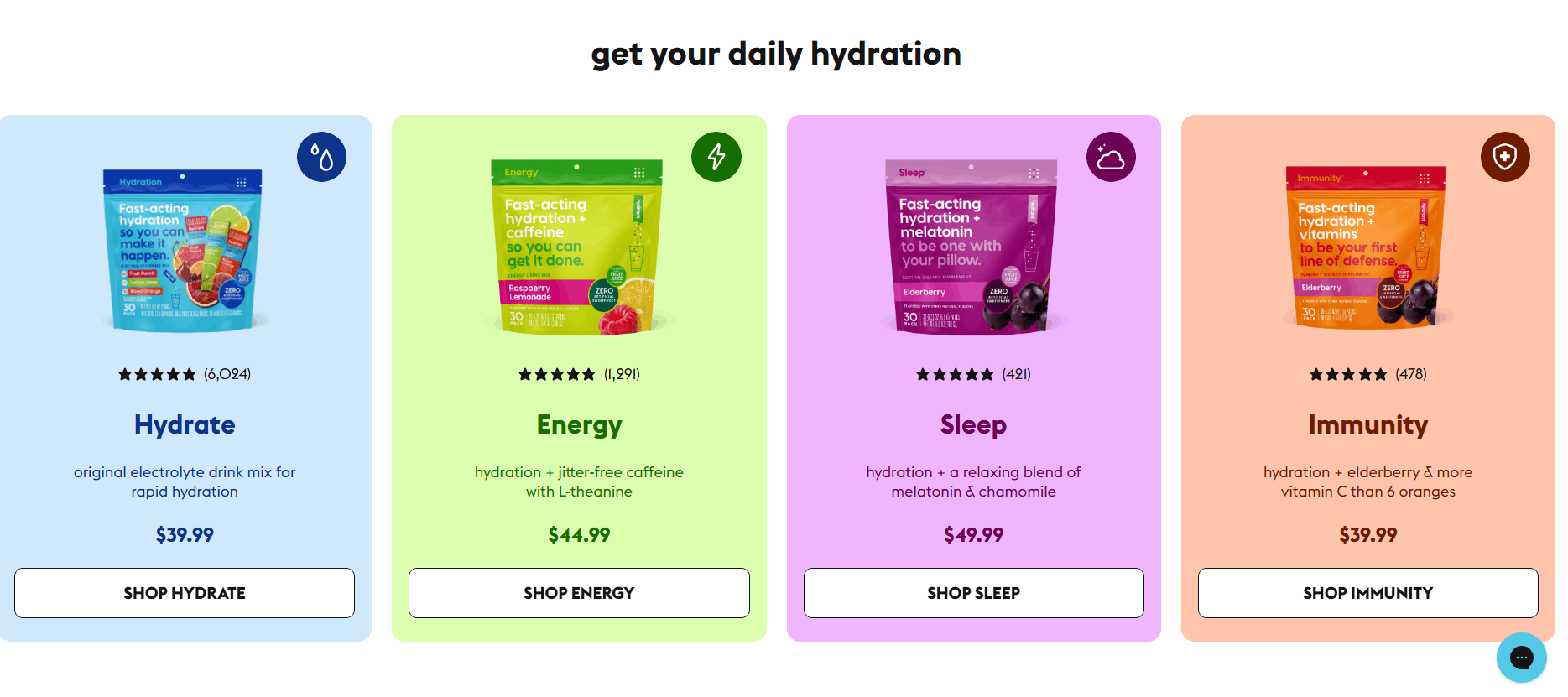
The brand integrates its subscription model with a loyalty program called Hydrant Rewards.
Subscribers earn points every time their recurring order renews, effectively rewarding loyalty over one-time purchases.
Those points can be redeemed for discounts on future boxes, creating a clear incentive to remain subscribed.
By tying rewards directly to ongoing renewals, Hydrant reinforces the value of staying subscribed month after month.
The longer a customer remains active, the more benefits they accumulate, making cancellation feel like walking away from earned value.
7. Communicate regularly to reinforce value
If subscribers only hear from you when a payment fails or after renewal, the relationship becomes transactional and weakens.
Regular communication reinforces value and keeps your product relevant in the customer’s life.
In fact, personalized marketing strategies, including email, offers, and user engagement content, significantly improve perceived usefulness and customer retention by strengthening the connection between subscription usage and subscriber satisfaction.
This does not mean sending daily promotions. It means sending useful, contextual communication that supports the subscription experience.
Effective subscription communication includes:
- Delivery reminders and cutoff dates
- Product usage tips
- Education that increases perceived value
- New release announcements
- Personal milestone messages
The goal is to prevent confusion and reduce “passive churn,” where customers cancel simply because they forget why they subscribed in the first place.
8. Provide excellent and accessible customer service
If it’s slow or difficult for customers to resolve their issues, they lose confidence in your brand.
Strong customer service reduces churn by quickly and professionally removing friction and turning a potential negative experience into a positive one.
Good customer service involves:
- Fast response times
- Clear escalation paths
- Easy-to-find contact options
- Support agents with access to full customer history
If a delivery is delayed and the customer receives no clear explanation, perceived value drops immediately.
Research in subscription-based commerce environments shows that personalized, responsive support can reduce churn significantly because it addresses issues before they escalate into cancellations.
A strong example is FabFitFun. The subscription box brand maintains a robust self-service help center alongside responsive live support.
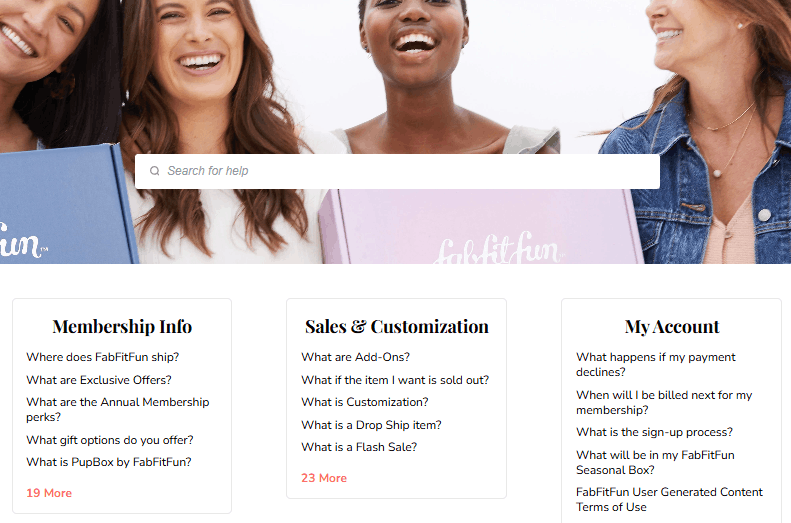
Customers can track shipments, manage preferences, and resolve common issues without friction.
When intervention is required, support agents can view account history and product selections, enabling faster resolution.
This prevents issues from escalating into cancellations and reinforces trust.
You should view your customer service team as a retention mechanism, with every resolved issue protecting recurring revenue.
9. Implement a smart dunning process to recover failed payments
In many subscription businesses, a significant portion of cancellations is caused by failed payments rather than customer dissatisfaction.
Industry research shows that failed transactions can account for up to 40% of total churn in subscription models.
That makes involuntary churn one of the most preventable forms of revenue loss.
Common causes include:
- Expired cards
- Lost or replaced cards
- Insufficient funds
- Temporary payment processing errors
These customers often still value your product. They simply never complete the renewal process.
A smart dunning process helps you automatically recover this revenue.
Effective dunning includes:
- Automated retry logic at optimized intervals
- Clear, well-timed customer notifications
- Frictionless billing update flows
- A supportive, non-threatening tone
Well-implemented recovery systems can reclaim a substantial percentage of failed payments.
Some providers report recovery rates of 70–80% when retry logic and communication workflows are properly configured.
Dunning emails should not sound like debt collection notices. They should explain the issue clearly, provide a simple next step, and reinforce that the subscription will continue once the issue is resolved.
10. Collect and use data to drive personalization
Earlier, we highlighted how regular, personalized communication enables you to provide greater value to customers, which drives retention.
However, you can’t create that personalization accurately and at scale unless you collect and use detailed customer data.
Basic techniques you should master include:
- Segmenting by tenure
- Segmenting by product type
- Tracking engagement levels
- Triggering contextual messaging
This enables you to create more targeted campaigns, for example:
- High-engagement customers may receive early access or exclusive offers.
- Lower-engagement subscribers may receive education or usage reminders.
- Long-tenure subscribers may receive milestone recognition.
Other datapoints that subscription businesses should also track include:
- Purchase frequency and usage patterns
- Skipped shipments or pauses
- Downgrades and plan changes
- Cancellation reasons
- Payment failure history
- Support interactions
These signals reveal intent and give you insight into customer behavior. You can use this to design your retention strategies.
Once you are collecting and analyzing data, build a feedback loop:
- Collect behavior data
- Identify patterns
- Adjust offers, messaging, or product structure
- Measure retention impact
- Repeat
This helps you quickly identify and resolve emerging issues, ensuring your business continues to improve and grow.
11. Re-engage previous customers with structured win-back campaigns
Former subscribers are often more valuable than cold prospects. They already understand your product, have completed onboarding, and have paid before.
Targeted win-back campaigns can reactivate between 6–22% of inactive customers, depending on timing and execution.
Here are some tips for an effective campaign:
- As with many of the strategies on this list, begin by looking at the data: why did the customer leave?
- Choose a suitable offer that will tempt them back. For example, a subscriber who paused due to cost may respond well to a limited-time incentive 30 days later.
- Next, choose how you’ll reach out to the customer. Email is still the most effective re-engagement channel, but you might also consider social media, SMS, or direct mail.
- You should also experiment with timing. Immediate outreach can feel intrusive. Waiting too long reduces relevance. Many brands test 30-, 60-, and 90-day windows to identify when reactivation rates are strongest.
- The message itself should focus on change. Highlight product updates, new features, improved plan options, or social proof that reinforces value. Avoid generic “We miss you” emails that offer little substance.
Get an Ecommerce Platform Built for Subscription Retention
Subscription retention requires structured onboarding, flexible subscription management, intelligent cancellation flows, targeted incentives, strong communication, and disciplined use of data.
When these elements work together, churn decreases, lifetime value increases, and growth becomes more predictable.
But implementing all of this manually is difficult.
Effective retention depends on visibility into customer behavior, real-time data on churn drivers, automated recovery systems, and the ability to act before cancellation happens.
This is where the right subscription platform matters.
Subbly is an ecommerce platform and website builder specifically designed for subscription-first businesses.
It provides the infrastructure needed to execute the retention strategies outlined in this guide, including:
- Flexible subscription management
- Smart dunning tools with automated retry logic
- Customizable cancellation flows with reason capture
- Loyalty integrations
- Built-in analytics across churn, CLV, MRR, and payback
Most importantly, Subbly’s AI Churn Predictor analyzes behavioral signals to identify subscribers at risk before they cancel.
Instead of reacting to churn after it happens, you can intervene early with targeted offers, plan adjustments, or personalized communication.
With Subbly, you make retention proactive, not reactive. When retention improves, other business metrics become easier to manage.
Subbly provides the tools to make that possible.
Start your free trial and build a subscription business that grows because customers stay.


