
The Advantages of Launching a Subscription Box Business
There are a wide variety of benefits for entrepreneurs starting subscription box businesses. Here are five important ones:
Recurring revenue: This model generates a recurring and stable income stream.
Scalability: Once you have a successful service with a solid subscription base, you can easily increase your subscriber numbers through marketing and referrals.
Inventory management: A subscription model means you can accurately predict your inventory needs, which can help you manage costs more efficiently.
Higher lifetime value: Because customers spend more through a recurring subscription, the revenue you generate per customer is higher than it would be in other business models.
Decent profit margins: Subscription boxes have a profit margin of between 40-60%. This is in contrast to general small businesses, which have an average profit margin of between 7-10%.
Higher multiples: Due to the ongoing income of subscription box services, investors and buyers will likely value it with a higher multiple when you sell shares or exit your business.
💡 Read our article 8 Benefits of a Subscription Box Model to learn more.
Many subscription businesses have made massive profits from their subscription services or products. Here are some examples:
- Framed By Sarah: Their founder, Sarah Williams, says she’s made over $1,000,000 from her subscription box business.
- Birchbox: Founded by Katia Beauchamp and Hayley Barna, Birchbox grew quickly from a small investment to millions in annual revenue.
- Dollar Shave Club: Founded by Michael Dubin, Dollar Shave Club revolutionized the razor market with its replenishment subscriptions, leading to a $1 billion acquisition by Unilever in 2016.
This shows that, by pursuing subscription box business models, both you and your investors stand to gain a lot.
The right subscription business model offers a range of benefits to entrepreneurs who want steady revenue, predictable growth, and stronger customer relationships.
Let’s get started on your custom subscription box. We’ve broken it down into an easy, five-step process:
- Choose your subscription box: Coming up with an idea that will attract loyal customers.
- Start your planning: Plan all aspects of your business and box.
- Set up your operational framework: Choose an e-commerce platform.
- Market and promote your box: Stoke engagement before you launch, and after.
- Launch your box: Customer loyalty becomes critical, as does monitoring metrics.
Step 1: Choose Your Subscription Box
The quick version: Your idea is the foundation of your business.
Begin by deciding what type of subscription box you will sell. You can choose one of the more popular subscription box categories or select something unique.
Popular subscription box niches
Your first option is to select items that are already popular. The graph below shows the most popular types of subscription boxes as well as their average pricing:
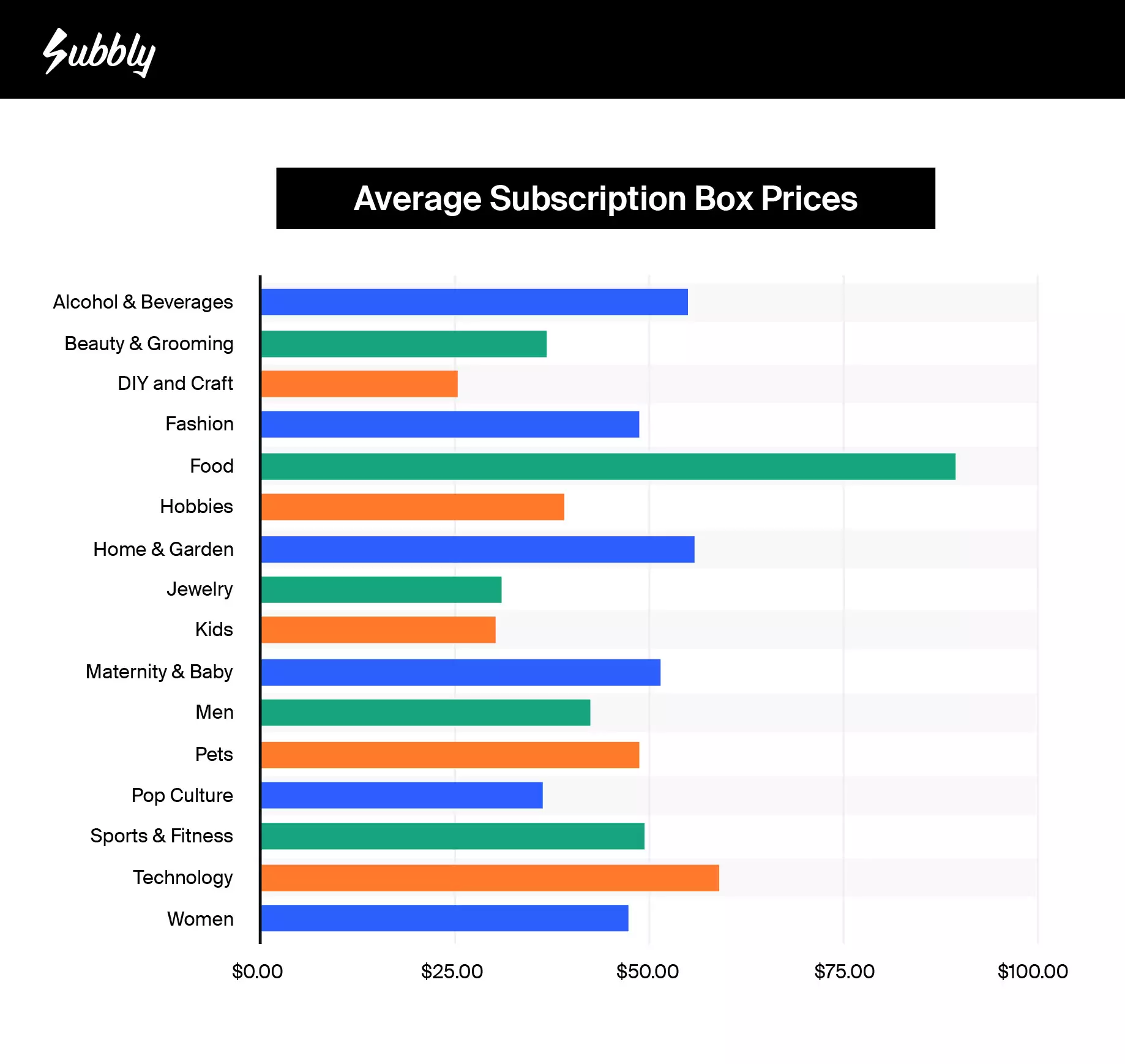 If you choose a popular category, the challenge you face is that the market is already saturated.
For example, there are hundreds of food and meal kit boxes already out there.
This means you may have a harder time competing with other subscription services for customers. This is where you may want to lower the price of your box to entice new subscribers.
On the upside, if you choose a popular type of box, it should be relatively easy and affordable to source products to include. For example, if you choose beauty, you can buy these items from wholesale suppliers at a relatively low price.
Specific subscription box niches
Coming up with popular subscription box ideas ensures established demand. However, there are also several benefits of niching down and curating a truly unique box.
Firstly, you won’t be competing with a massive market to sell your boxes, as there’ll likely only be a few available in your niche.
You’ll also be able to charge more per box because subscribers can’t find these products as part of a subscription elsewhere.
Additionally, although the demand for your products may be lower due to their specificity, you’ll have access to an untapped audience to sell to.
However, the downside to choosing niche market products to include in your box is that these items could be more expensive to source.
The best niche subscription service is based on your own passions. You can directly translate this into the products you offer in your boxes.
For example, if caring for your dog is extremely important to you, this can help you choose products for your pet-related box that other dog owners will appreciate.
Need more help figuring out which products to sell? Have a look at our in-depth guide on choosing products for subscription boxes!
Understanding your competitors
Whether you’re choosing a more popular type of subscription box or a highly specific niche, you need to perform thorough market research to determine your competitors.
Conduct a competitor analysis of companies that already sell your idea and find out:
- How many boxes you’re competing with
- What do these subscription boxes offer, and at what price?
From there, you can start thinking about how you can differentiate your subscription box from your competitors’.
Step 2: Start Your Planning
The quick version: Leave no stone unturned when it comes to planning.
Once you’ve chosen a model, it’s time to move on to the planning phase of your own subscription business.
If you’re starting a new business idea from scratch, keep reading. Or you can check out our guide to adding subscriptions to an existing business
Creating a business plan
The best way to plan your business is to write a solid subscription business plan
Identify your target audience
Identify your ideal customer profiles (ICPs). This is an in-depth description of the type of person that needs your product the most and is profitable to serve.
Create a breakdown that includes your ICP’s age, location, income bracket, education, profession, lifestyle, and any other relevant demographics.
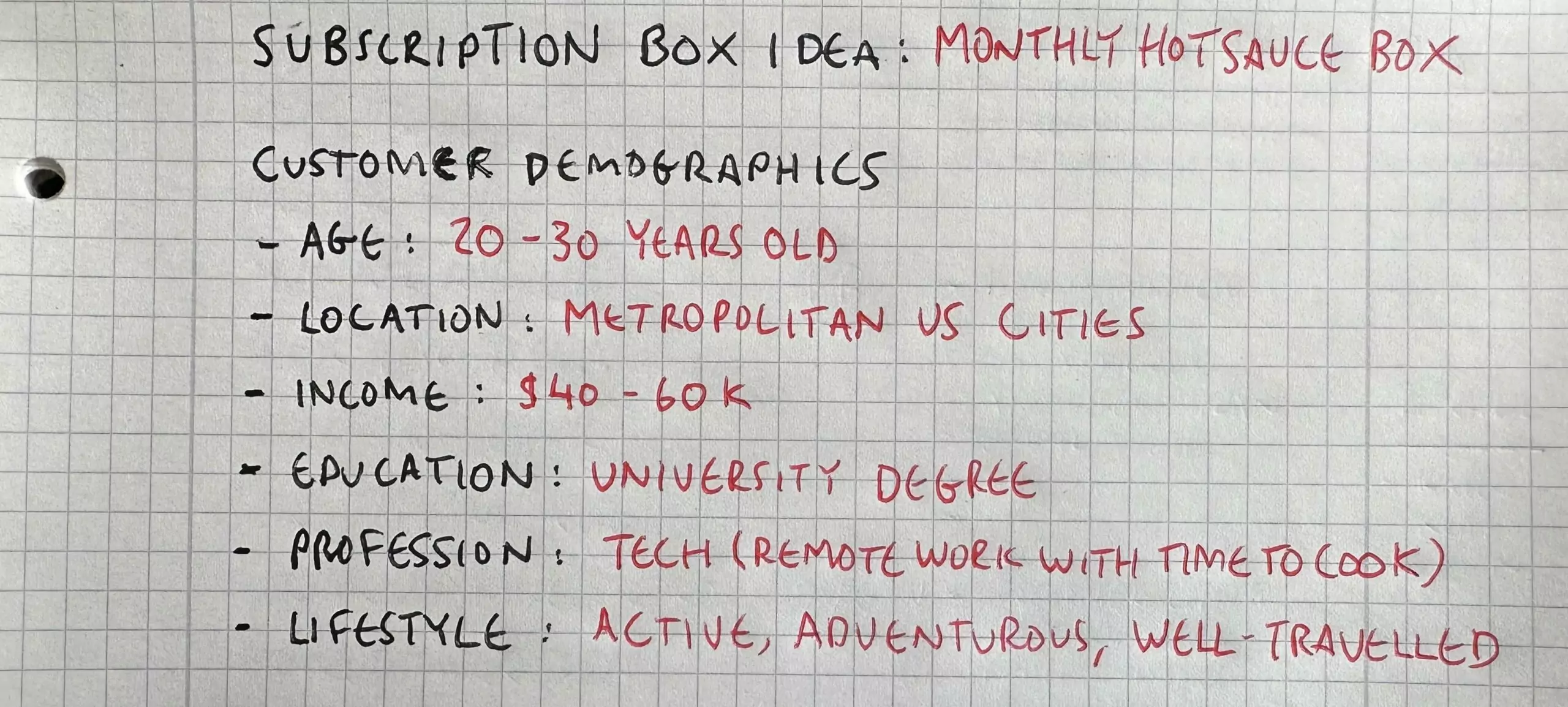
This will help you to understand customer expectations and shape your product, brand and marketing around them.
Other things your business plan will need to include are:
- Your value proposition: A short statement that describes why people need your product and how it differs from your competitors.
- Your sales and marketing framework: How you’ll tell potential customers about your products and which marketing channels you’ll use. More on this later.
- Potential risks: A list of risks your business might face and what your strategy will be should things go wrong.
- Your financial plan: This should cover your costs, profit margins, and pricing strategies. You should also forecast your revenue—more on how to do this later.
Staring at a blank page? AI tools like ChatGPT can help you build a strong business plan from scratch, even if you’re not sure where to start.
Generative AI tools like ChatGPT or Google Gemini are useful when producing your business plan. For example, if this is the first time you have ever written one, they can help you understand the sort of information that should be included.
It’s important not to rely on AI completely. Treat it like a creative partner who helps you generate ideas, write your plan faster, and think through your business more clearly.
Here are some specific areas where it can help.
Build customer profiles: AI can generate sample customer personas based on your inputs (like age, lifestyle, and goals). Use these to better understand who you’re targeting.
Refine your niche: Tell the AI who your ideal customer is and what kind of product you’re considering. It can suggest new ideas, angles, or ways to differentiate your offering. This is especially useful if you’re still narrowing down your subscription box concept.
Draft key sections fast: From executive summaries to competitor research, AI can create first drafts you can then tweak and build on. It won’t be perfect, but it’ll get you moving quicker.
Make complex calculations: The AI can generate simple income forecasts or break-even models by analyzing your financial analysis and pricing strategy. You’ll still need to check the math, but it’s a fast way to model different scenarios.
Polish your writing: Already written your plan? Use AI to tighten the language, simplify the structure, or improve clarity. This is especially helpful if you plan to share it with investors or suppliers.
Sourcing products for subscription boxes
Once you have a business plan in place, it’s time to think about how you’re going to source products for your subscription. Here’s what you need to plan for:
What are you going to sell?
To get a solid grip on your product procurement strategy, find out what your target market wants.
What stories will resonate with them, and what can you do to improve existing opportunities in your niche?
Where are you going to find items?
Where are you going to find these products? There are plenty of places for you to find high-quality suppliers for your subscription products. Here are some suggestions for sourcing products:
Explore indie marketplaces
Platforms like Etsy and eBay are treasure troves for unique, handcrafted items. Independent manufacturers selling on these platforms are often open to negotiations and providing free samples. They are also flexible and may provide bespoke solutions upon request.
Attend trade shows and fairs
Industry trade shows are great places to discover suppliers. For example, if you provide an arts and crafts subscription box, you might attend the London Craft Week. The event brings together makers and designers from all over the world.
Websites like Global Sources and EventsEye list upcoming events where you can connect directly with manufacturers and wholesalers.
Check out crowdfunding platforms
You can often find innovative new products vying for funding on platforms like Kickstarter and Indiegogo. Creators are often happy for opportunities to sell their products, and you may be able to get exclusive items.
Connect with local artisans
Local markets and craft fairs are ideal for finding unique products and building relationships with creators. The local aspect adds to the story behind your subscription box.
Scour social media
Artisans and small businesses often showcase their products on social media platforms like Instagram and Pinterest. Use relevant hashtags to discover potential suppliers and reach out directly to discuss collaborations.
💡Get inspired! If you’ve decided on the general subscription box theme you’re going for and are looking for some inspiration, browse through some of our favorite examples of subscription box ideas.
You also need to ask whether your product makes sense being sold on subscription. Generally, the following categories suit the subscription business model:
Essential Consumables: Items like coffee, toiletries, or snacks that require regular replenishment.
Systems: Products that work with recurring components, such as a base device with monthly refills.
Collectibles and hobbies: Items that cater to enthusiasts and encourage ongoing collection.
Memberships: Access to exclusive content or communities that provide continuous value.
Consider your product packaging
The physical packaging of your subscription box is important for two reasons.
First, your packaging directly reflects your brand’s attention to detail. It’s key to keep everything aligned with your brand identity. The unboxing experience is a particularly important touchpoint in this regard; more on this later.
Secondly, the quality of your packaging will affect the condition in which your products arrive when they’re delivered.
You may want to consider custom packaging as a way to showcase your brand and ensure that everything gets to its destination intact and in its original condition.
💡Top tip: Don’t forget to order a prototype box and fill it with the products you intend to sell. This allows you to make sure everything looks good when customers receive it, aesthetics and product integrity are hugely important in the subscription box industry.
Plan your finances
Planning your finances might not feel as exciting as designing your subscription box, but it’s one of the most important steps to getting your business off the ground and keeping it running.
Here’s a breakdown to help you handle the numbers.
💰 Start with your costs
Begin by calculating how much money you need to get started. Think about things like:
- Products: How much do the items for your boxes cost? Don’t forget to include shipping from your suppliers!
- Packaging: Boxes, filler, tape, and any custom branding.
- Your website: Whether you’re hiring a designer or using a DIY platform, there will be costs.
- Marketing: Social media ads, email campaigns, or paying influencers to spread the word.
- Admin: Business registration, taxes, and accounting software.
- Shipping and fulfillment: If you’re not doing this yourself, you’ll need to budget for storage and packing.
Write everything down in a spreadsheet or use a tool to keep track.
💡 Fact: On average, starting a new subscription box business will cost you between $5,000 and $50,000.
Choose your pricing model
Having a clear overview of your costs helps determine how to price your subscription box. Keep your subscription business profitable by ensuring your price covers your expenses, plus some extra.
Here’s a basic formula for this:
Price per Box = your costs + (your costs × profit margin)
For example, if your box costs $15 to produce and you want a 50% profit margin, your price should be $22.50
There are two main ways to approach pricing:
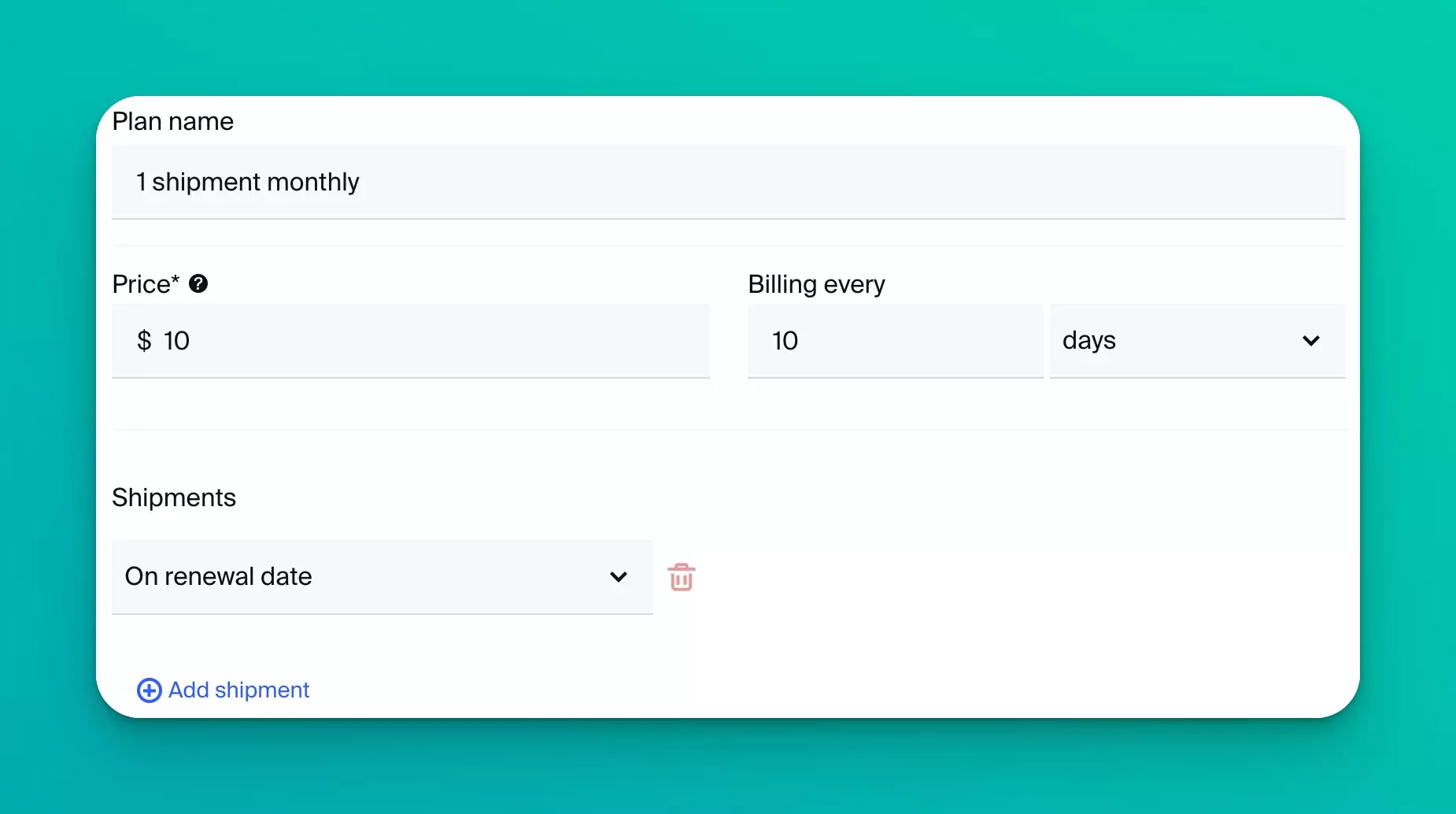
Fixed pricing: This kind of pricing means you’ll have one box type with a predefined selection of products at a fixed price, often charged on a monthly subscription fee basis.
It’s the easiest pricing model to start with and gives you more time to focus on other important early-stage aspects of your business, like finding new customers.
Here’s what setting up fixed pricing looks like on Subbly:
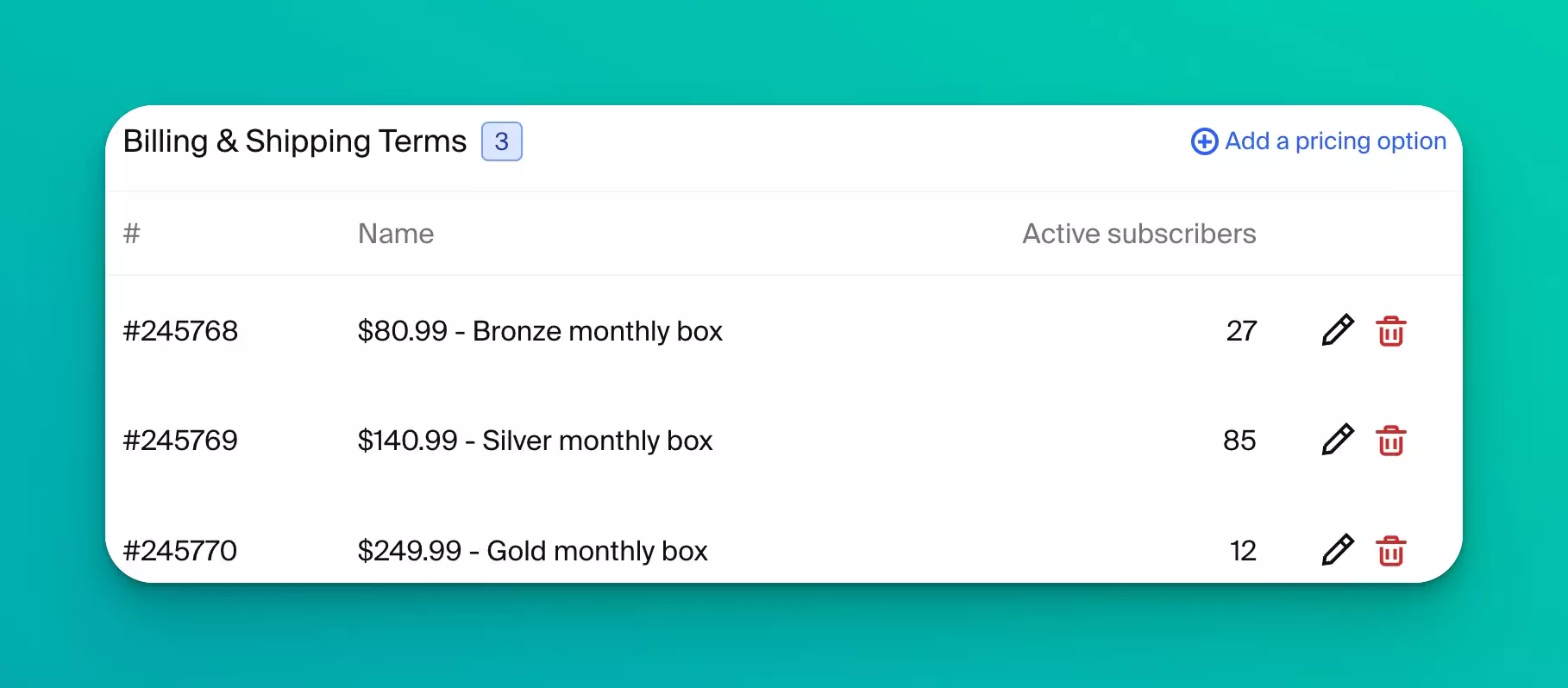
Tiered pricing: Tiered pricing means you’ll offer multiple types of subscription boxes with different selections of products at varying price points. For example, you might offer a more expensive tier featuring premium services and products and a cheaper tier that offers the basics.
While this is a bit more complex to set up and manage, tiered pricing is a great way to meet a diverse range of customer preferences.
💡 Want to learn more? Then check out our guide to subscription pricing.
Use SKUs to adjust pricing
Stock-keeping units (SKUs) help you manage inventory, adjust pricing for specific product tiers, and gain insights into which subscriptions are most popular.
Let’s say you’re offering a skincare subscription box with a different number of products in each tier. Each subscription box will be assigned a unique SKU:
- Basic Box: SKU – SK-BB001 (Includes two products for $25)
- Premium Box: SKU – SK-PB002 (Includes three products for $40)
- Luxury Box: SKU – SK-LB003 (Includes five products for $60)
If you notice that new customers are increasingly choosing the Premium Box over the Luxury Box, you can adjust the price of the Luxury Box by simply updating its SKU.
For example, you could offer a 10% discount to make it more appealing without affecting the pricing of other tiers.
This is how you would set up tiered pricing for your subscription business model on Subbly:
In terms of margin, try to aim for around 50%.
💡 Learn more about how you can use SKUs to control stock with Subbly.
“I didn’t understand entirely how expensive tools and gear actually were. The biggest challenge is getting the products for the right price, especially as the smaller businesses we work with often have to charge high prices themselves just to make slim margins. This makes it harder to source enough products for a satisfying box.”

Thomas Ansu, Founder of $130k MRR subscription company Burn Box
Plan cash flow management
Cash flow is all about making sure you have enough money coming in to cover what’s going out.
Here’s how to stay on top of it:
- Create reserves: Save up 3–6 months of expenses for emergencies.
- Stagger payments: Negotiate with suppliers for longer payment terms so you’re not paying for products before you get revenue from customers.
- Offer early payment discounts: Encourage annual subscribers by offering a small discount.
- Manage inventory carefully: Avoid tying up too much money in products you don’t need right away. Order enough to meet current demand, with a little extra buffer for growth.
- Track expenses: Even small costs like tape or bubble wrap can add up. Know where your money is going so you can cut back if needed.
- Plan ahead: Use a spreadsheet to map out when money will come in and when bills are due.
Create a monthly budget
Once your business is rolling, keep track of your regular expenses and income. Break it into:
- Fixed Costs: Things like software, rent (if needed), or insurance.
Variable Costs: Marketing, shipping, and anything that changes month to month.
(Source: Subbly competitor benchmarking)
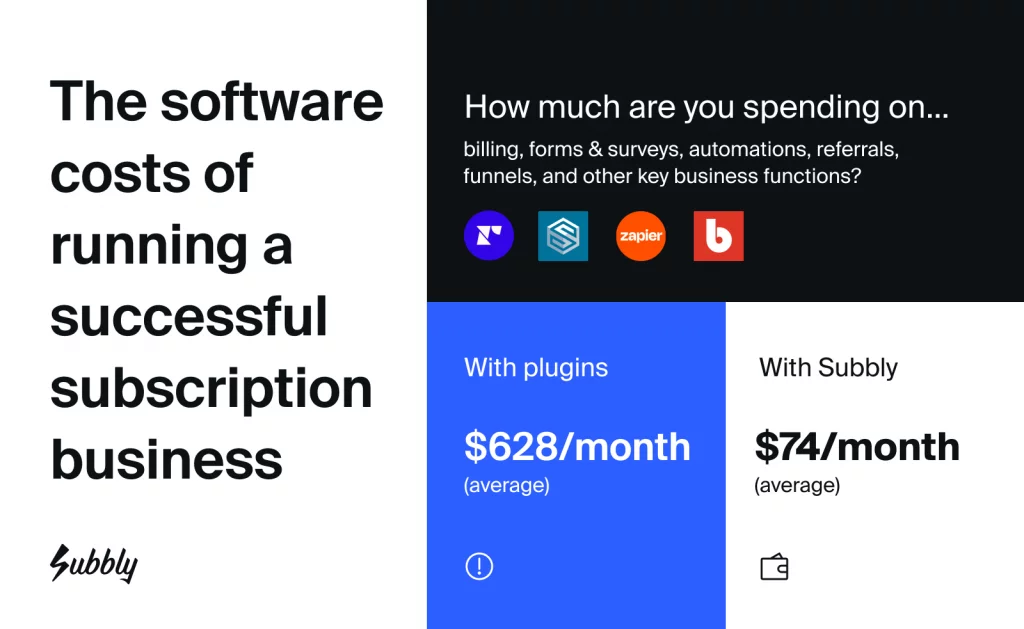
Pricing your subscription box service is tricky. It’s more than just picking numbers and hoping they work.
You need to find a balance that attracts potential customers and motivates them to subscribe.
Here are three important steps to consider when setting your prices:
Setting your goals
Now is the time to determine what the main goals for your business are going to be. If you want to run a successful business, your goals should be:
- Landing conversions: This is turning prospective customers into paying subscribers.
- Retaining your customers long-term: It’s important to retain your customers by keeping them happy. Acquiring new subscribers is far more expensive than pleasing your existing customers.
- Focusing on customer experience: Deliver the perfect customer experience to delight your subscribers. This experience starts with them discovering your product and extends to them receiving their box.
- Becoming an everyday product or service in households: This is how you lower customer churn and ensure your subscription box is always in demand.
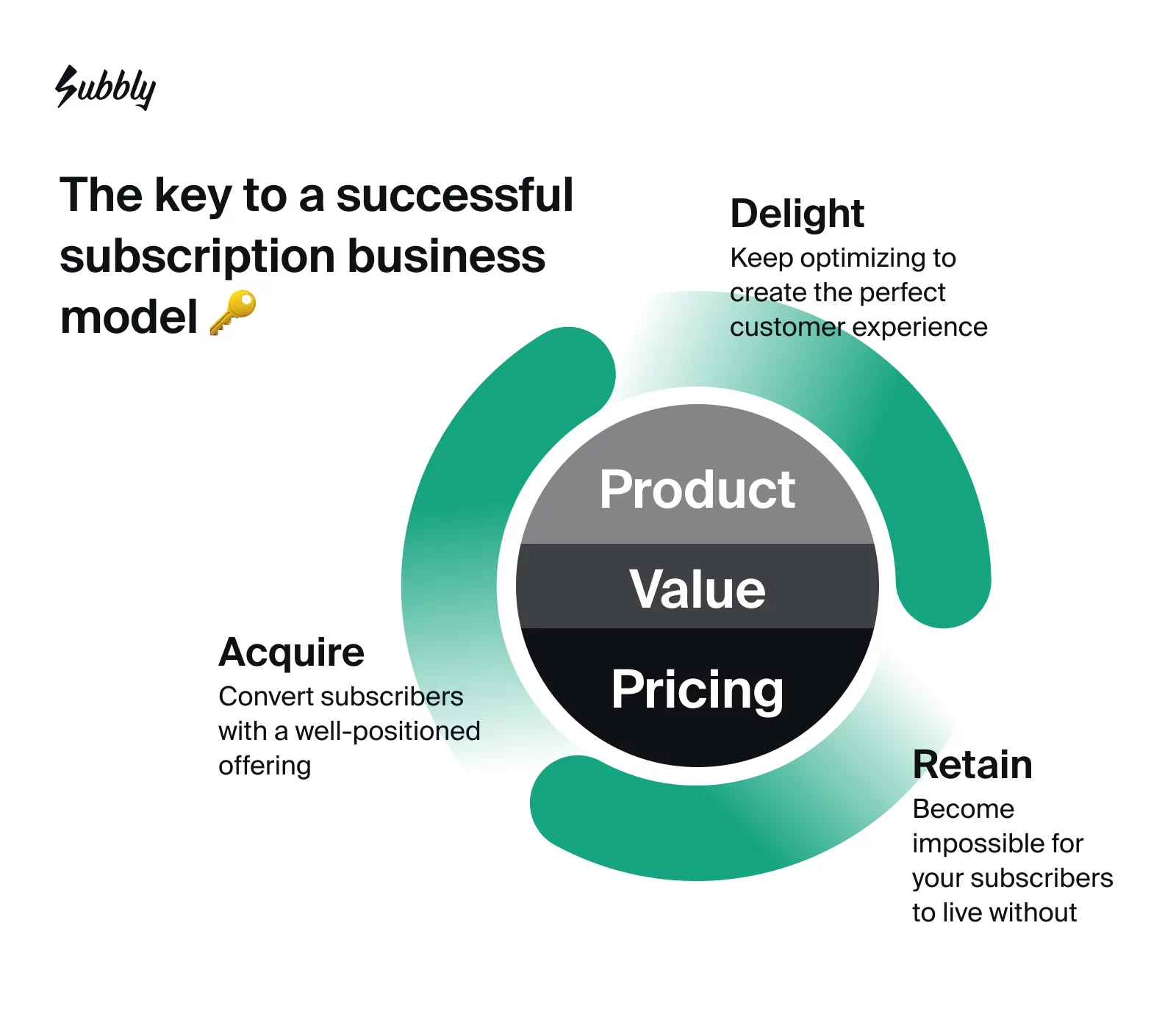
Successfully selling subscriptions involves finding the perfect balance between product, value, and pricing.
Once you’ve achieved these objectives, you’ll be able to scale your service exponentially and get the ongoing income you need for a successful subscription business.
Step 3: Set Up Your Operational Framework
The quick version: Start things off on the right foot. Choose an e-commerce platform that includes website creation, shipping, and billing.
Setting up your operations entails everything from choosing a subscription box platform, setting up a website and online store, and planning logistics around customer convenience.
The more thought you put into setting all this up, the easier it will be to scale once your loyal customer base starts to grow.
Remember, it’s best to use a platform designed for your business model. Check out the differences between different subscription e-commerce solutions to help make your choice.
Choose an e-commerce platform
Simplicity is the primary thing to look for in a subscription e-commerce platform. Of course, it should also be designed for your unique model, but ensure that the platform you choose:
- Is built to scale and doesn’t charge you per subscriber.
- Is secure, reliable, and frequently updated.
- Allows you to do as much as possible in one place.
Be cautious of e-commerce platforms that lack built-in features for managing recurring payments, selling subscriptions, customer retention, and tiered pricing.
Without these built-in services, you will be forced to rely on third-party plugins or custom workarounds.
For example, Think Outside Boxes, which sends monthly boxes with outdoor activities and gear for kids, initially used a mix of WooCommerce and manual processes.
As their business grew, they needed a simpler, all-in-one solution to handle their online management and focus more on expanding their business.
Today, with the help of Subbly’s all-in-one platform, their business is thriving with a simpler system that helps them run their operations smoothly.
Here are some of the 100+ subscription-focused features you get when signing up with Subbly:
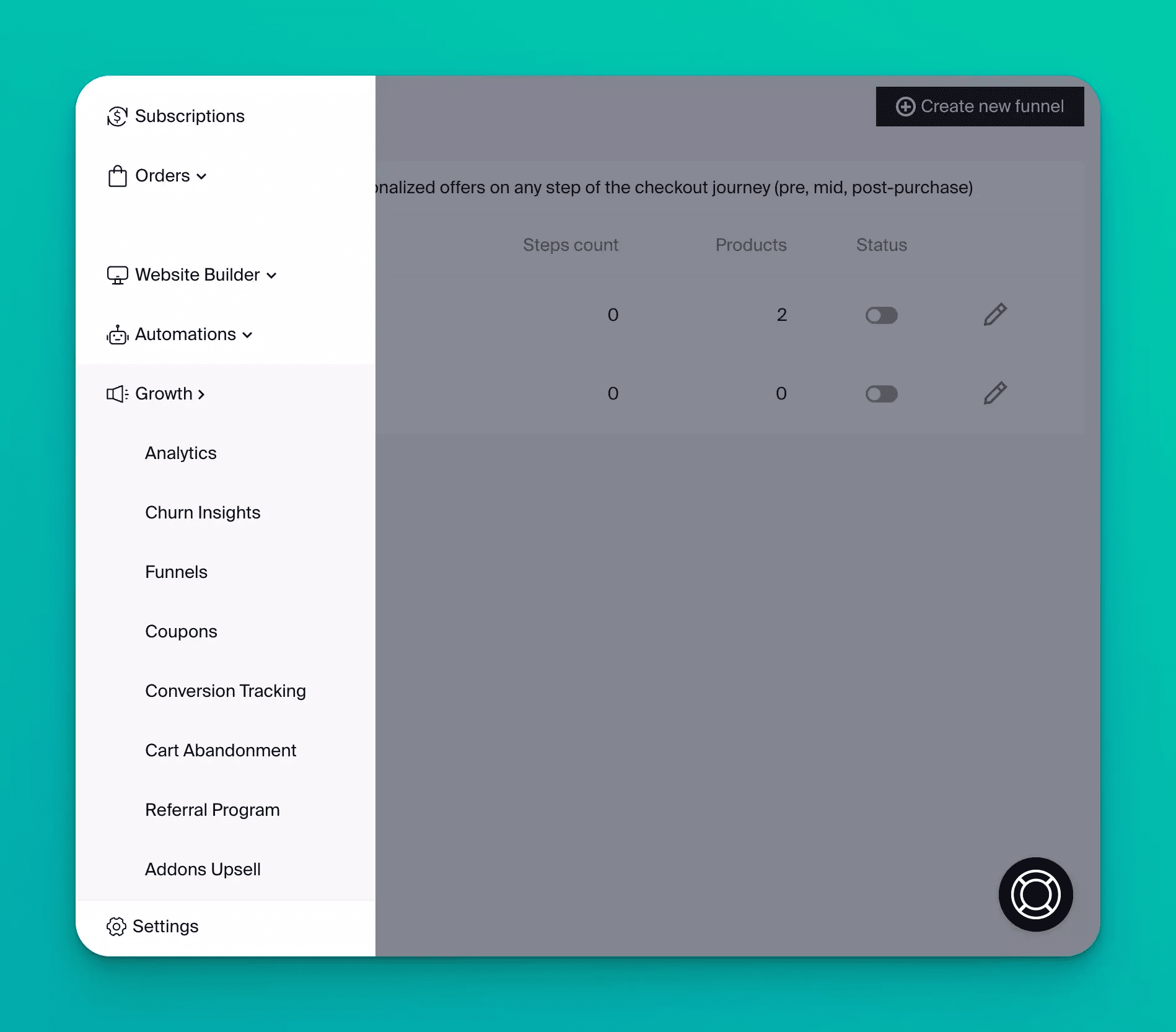
(Some of Subbly’s 100+ subscription-focused features.)
Here’s what one of our merchants had to say about choosing us over her previous solution.
“It was easy to migrate to Subbly from a WordPress site powered by Shopify and Bold, and it’s been great so far – our MRR is already up 13%!”
Jill Lodato, Founder of Kids Baking Club
💡 Check out our guide on choosing the right e-commerce platform or our roundup of the best subscription ecommerce platforms to help you make your decision.
Set up your website
There are many ways to set up a subscription box website, but if you’re not a coder, your process will probably look a lot like this:
- Choose a website template: It should be easy for users to navigate and feature a simple design that avoids clutter.
- Create a logo, or upload an existing one: Your logo should make it easy for consumers to spot your brand from a mile away. This is the foundation of your brand identity, so choose wisely.
- Create your marketing copy: As mentioned earlier, you may wish to use AI to help you with this part. As before, you need to review everything and make sure the copy sounds human. Getting your marketing messaging right is crucial to the success of your business.
- Make it SEO-friendly: Your code needs to be semantic, and your copy needs to use the right keywords to rank high on Google’s search engine and attract new customers. Make sure your e-commerce platform offers this (P.S. Subbly does).
- Ensure responsiveness: Your website needs to look good on every device, including mobiles, tablets, and desktops. Test your website by viewing it on different devices and reach out to your platform administrators if it looks wrong.
- Prepare signup flows: Make sure each customer has a personalized experience by gathering customer data, such as their names, and incorporating it as part of their signup journey.
- Insert visual assets: This is how you add some flair to your website and help you create and maintain a cohesive brand identity.
- Tweak the colour scheme: It should align with your brand identity and be easy on the eyes.
- Launch your website: Once your website has gone live, you can come back and spend time refining it based on customer feedback and your analytics.
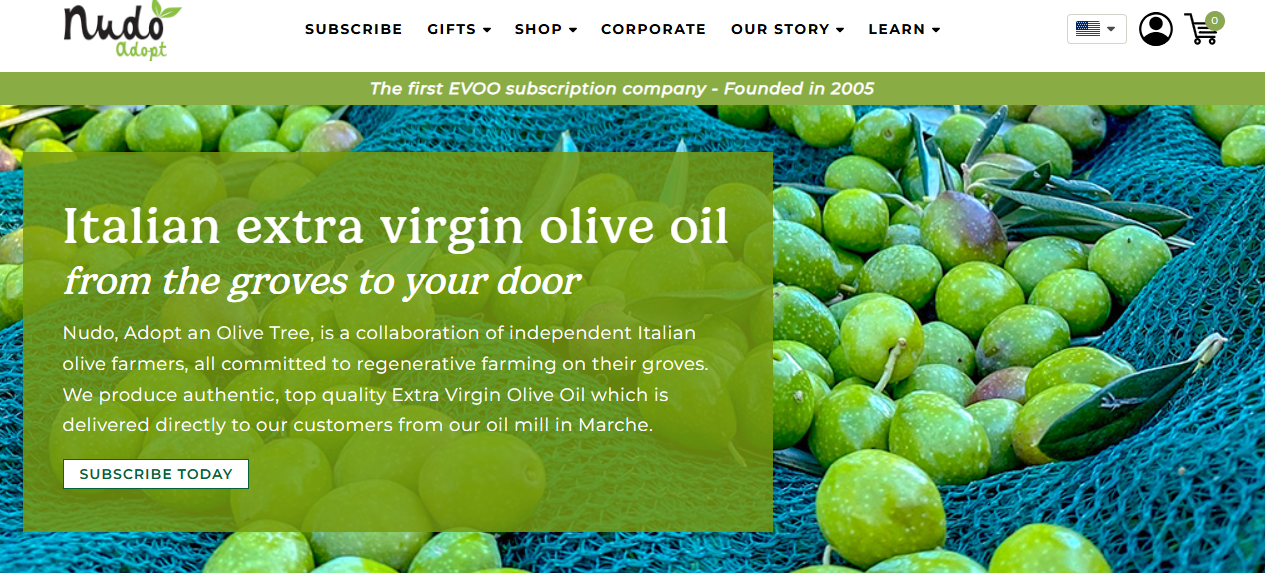
Here’s the website for olive oil seller and Subbly customer, Nudo Adopt. All Subbly website templates are optimized to rank high in Google search, convert customers, and support selling subscriptions.
Set up your signup flow
You should also customize the signup experience for your customers to make it more engaging.
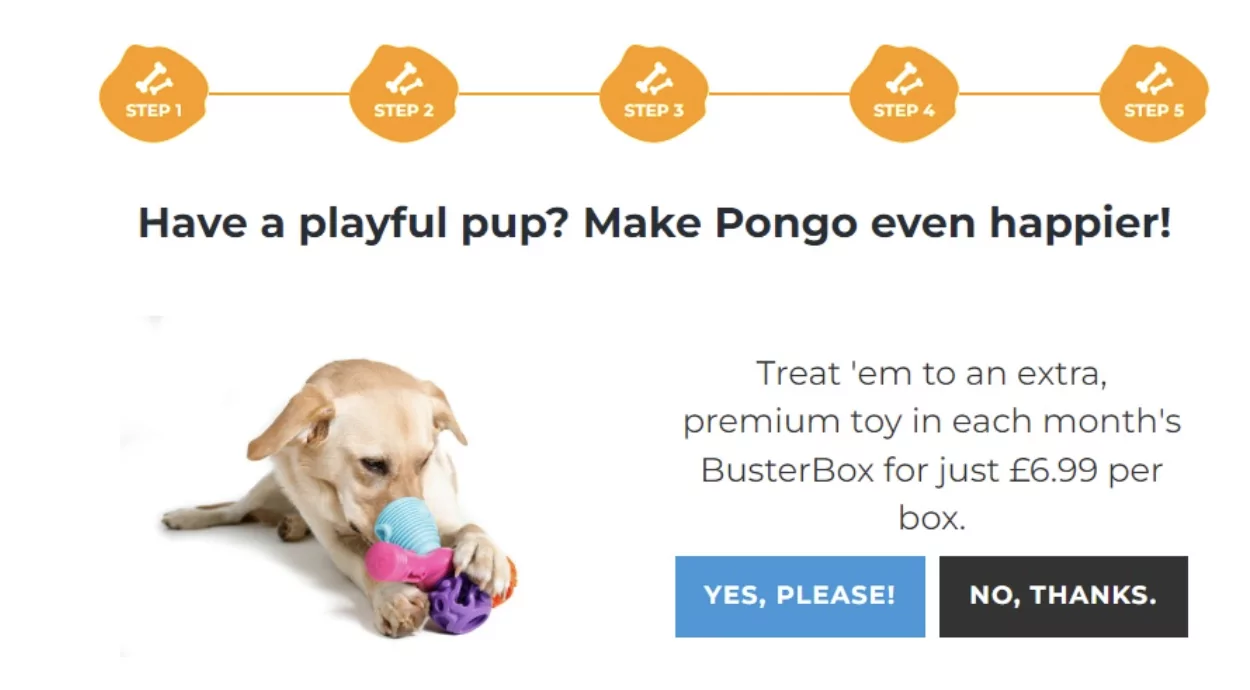
Take BusterBox, for example. Before their new customers reach the checkout, they ask five simple questions to personalize each subscription box.
BusterBox delivers healthy treats and toys for dogs, and they understand the perceived value of making each box feel special.
They start by asking for your dog’s name, breed, and birthday. Then, throughout the process, they refer to your dog by name, adding a personal touch.
For instance, if your dog is a Labrador named Pongo, and you’re at step five in their signup flow where they suggest adding an extra treat, you’d see a message like this:
Having a signup flow that matches your brand can make or break your subscription business.
A well-designed flow not only reflects your brand’s personality but also improves customer engagement, making them more likely to complete their purchase.
Establish your shipping and fulfillment
Shipping and fulfillment involve assembling your subscription boxes and shipping them from the warehouse, or from your garage, to your subscribers.
For your customers, it’s about the process of managing, tracking, and receiving their orders.
Transparent, two-way communication is vital, as is making sure all packages are shipped both on time and in good condition.
When it comes to shipping, it’s also important to consider how you handle returns. If a customer needs to return an item, ensure you have a clear and easy-to-follow return policy.
You should also consider how fulfillment might affect your customers’ carts.
For example, if they spend over a certain amount, will their shipping be free? Ensure you
have dynamic shipping rules in place to handle these changes effectively.
💡 We’ve got a full guide to logistics and shipping that you can read to help you set up these processes.
“In the U.S., boxes 13 oz and under ship first class. Anything over 13 oz will add another $3 to the base price. If you can strategically optimize your packaging to weigh 13 oz or less, the savings will add up quickly!”
Jill Lodato, Founder of Kids Baking Club
Fulfillment can either be done in-house or get outsourced:
In-house
This would mean you do everything yourself. For many subscription services or products, this is useful when starting out.
You’ll get an in-depth look at every aspect of the process and directly oversee quality control while achieving significant cost savings.The downside is that fulfillment comes with its fair share of challenges and costs, including liability insurance, cleaning warehouse space, paying labor, training employees, and ensuring quality control.
Outsourcing
Outsourcing means paying someone else to handle your fulfillment.
Finding a good shipping partner you trust is a worthwhile investment for your subscription business model.
“Outsourcing your fulfillment to an experienced external provider used to shipping thousands of packages a day can also give you access to a relationship with a postal consolidator – which can save you $1-4 per package compared to USPS, UPS, or FedEx direct. This is a great way to reduce your shipping costs.”
Ryan Culver, Founder: Platterful & Hempcrate
Here’s some more information on the fulfillment process, with a list of questions to ask potential fulfillment partners to save you time and help ensure they’re up to par.
Set up your billing process
Subscription billing allows merchants to automatically charge subscribers a pre-approved amount at certain intervals in return for their goods and services.
A good subscription billing framework is optimized to ensure every aspect of the customer journey related to transactions works as efficiently as possible. These aspects include:
- The checkout process: This should be as smooth and simple as possible to ensure potential subscribers check out.
- Account management: You need to ensure every aspect of each financial transaction is customer-friendly and that subscribers have a good experience making payments.
- Analytics: Often built into your payment provider, this feature can provide you with data on your revenue and all payments made to you.
- Revenue recognition: This is how your revenue is recorded and reported. The goal here is to ensure your revenue matches the number of deliveries of your subscription service.
- Payment processor choice: You need to choose a payment processor that is easy for your customers to use so that they can complete their payments hassle-free.
- Custom billing cycles: If your customers prefer quarterly billing instead of monthly, you need the flexibility to set this accordingly.
What happens if your customers pay their subscriptions late?
That’s where dunning sequences come in. They automatically remind customers to make their payments, saving you from manually chasing down overdue accounts. For example, Nail Mail, a subscription service for nail art boxes, cut their admin time in half after switching from Wix to Subbly.
Founder Gaynor McCann now spends 70% of her time running the business and only 30% on administrative tasks, compared to the opposite before the switch.
Here’s how Subbly allows you to select from a wide range of payment processors:
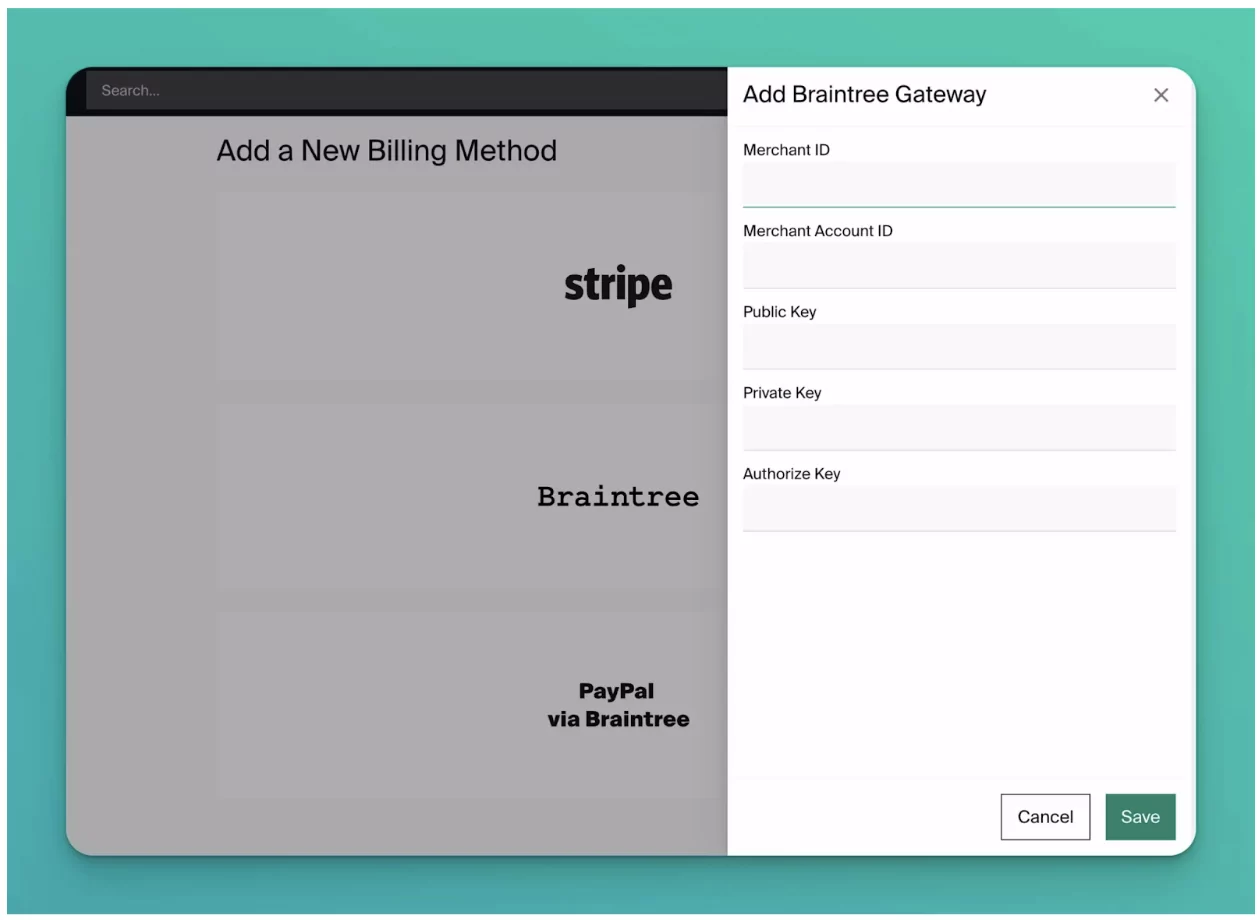
Subbly allows you to select from a wide range of payment processors.
Top Tip: For the most flexibility, we recommend offering multiple payment gateways such as Stripe, PayPal, and Braintree.
💡 Want to learn more? Then check out our complete guide to subscription billing.
Step 4: Market and Promote Your Box
The quick version: Get creative with your marketing strategies – the more engagement you can stoke before you launch, the better!
Marketing and promotion are key to customer acquisition, both in the initial stages and as your business grows.
There are a few things to consider at this point:
- How do you attract new customers? How do you get potential customers excited to start a subscription?
- What is your approach to marketing and promotion going to be? Will you use social media marketing campaigns, a unique landing page to build up your email list, or an excellent unboxing experience?
Marketing your subscription offering involves building a community of loyal customers who’ll stick with you for the long haul. Here’s how to get started:
Build buzz with a pre-launch campaign
This ensures you start earning revenue from day one. A successful pre-launch campaign consists of the following:
- A waiting list sign-up page: Build a landing page where interested customers can sign up. Offer an incentive like early access or an exclusive discount. Keep your copy simple and CTAs clear. Ensure you include high-quality photos of your products and what the final box looks like to entice potential customers.
- Teaser campaigns: Use social media channels and influencer marketing to start driving people to your website. You can also include links to your website in marketing emails to drive traffic to your site.
- Influencer collaborations: Partner with micro-influencers who align with your niche. Their audience trusts them, and their reach can create buzz around your box.
- Growing and nurturing your email list: Set up automated campaigns interspersed with some personalized outreach.
As your pre-launch campaign winds down, don’t lose momentum. Create urgency, keep posting on social media platforms, thank those who helped you, and make any last-minute tweaks.
 Tell your story
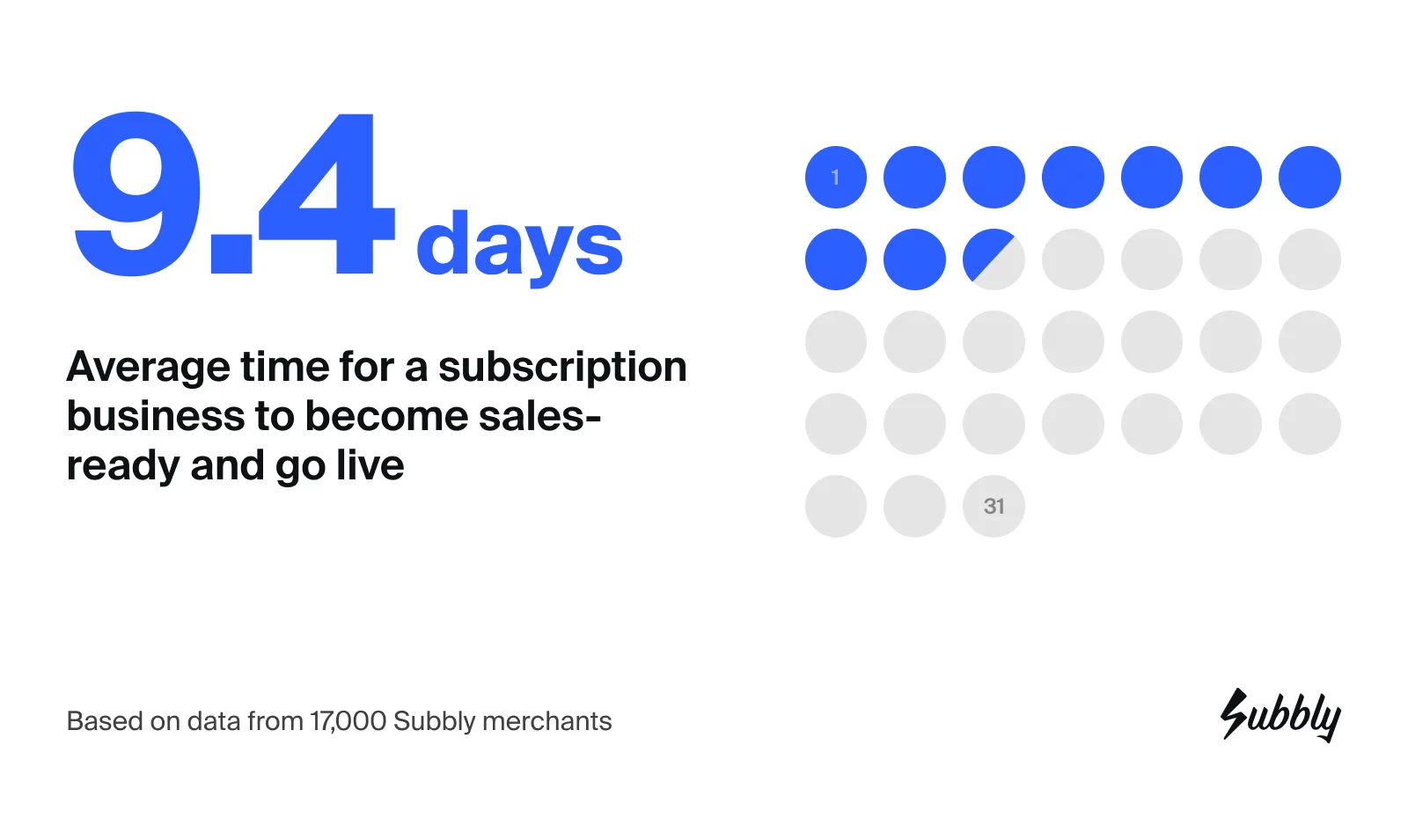
People don’t just buy products; they invest in stories that resonate with them.
Your brand’s story will help make your box stand out. Explain why you started your business on your website, in your social media posts, and through your email newsletters.
For example, Subbly customer Mama Box explains how the founders both experienced difficult pregnancies, igniting their passion for pregnancy wellbeing.

Leverage the unboxing experience
The unboxing moment is an exciting moment for your customer. Make it memorable by:
- Using attractive packaging that puts your branding front and center.
- Including a thank-you note or personalized message in each box.
- Encouraging customers to share their experience on social media by creating a unique hashtag or offering a giveaway for tagged posts.
Here’s a good example of an unboxing video on YouTube. In the video witchcraft and wizardry YouTuber Cherry Wallis unboxes a package from magic subscription box Magic, Delivered.
Much of Cherry’s audience is likely to be interested in Magic, Delivered’s products. She shows them what they will see when they open their package and talks them through each item in the subscription box.
She also gives her audience a discount code, making it more likely that her subscribers will convert.
Run targeted ads
Social media platforms like Facebook, Instagram, and TikTok are excellent for ensuring your ideal customers see your ads.
Focus on the platform that is most popular with your audience. Retargeting is a particularly effective strategy. This is when you show ads to people who have visited your website but didn’t subscribe. The chances are that these people were considering making a purchase but for some reason chose not to. By including discounts and offers in your retargeting ads, you make it more likely these people will convert.
Here’s an example from Australian experience gifting brand, Red Balloon that encourages abandoned cart customers to complete their purchase.

Engage with your community
Keeping in regular contact with your audience builds trust and relationships, reducing churn and increasing upselling and cross-selling opportunities.
Here are some strategies for nurturing an engaged community of subscribers:
- Email marketing: Send regular updates, exclusive offers, and helpful tips to your subscribers. Keep customers engaged by ensuring emails are personal and relevant.
- Social media interaction: Reply to comments, like posts, and share user-generated content. This creates a sense of connection with your audience.
- Exclusive communities: Create a private Facebook group or Discord channel for your subscribers to interact with you and each other.
The philosophy that should guide your approach is summed up beautifully by this quote:
”We were really pleased with our initial feedback, despite our rudimentary product. We thought this might be an issue for early adopters, but they were willing to put up with that as they knew they were getting great value. We worked on how we find and speak to our target audience too, and since, on top of more new subscribers, we’ve even seen an increase in member referrals.”

Tom Tryon, Co-Founder of VinoMojo
Want to learn more? We have several guides to help you market your subscription box, including:
Step 5: Launch Your Box
The quick version: Once you’ve launched, customer loyalty becomes critical, as does keeping a keen eye on your metrics.
Once you’ve launched your subscription box or other business model, other factors come into play. Are you ready to take the leap?
Looking ahead: Metrics, forecasting, and reducing churn
Tracking your metrics is crucial once your subscription box service has been launched.
What metrics and KPIs should you be tracking?
In a subscription context, some metrics are more important than others, and you probably don’t have time to track them all. A selective approach to subscription business analytics is key.
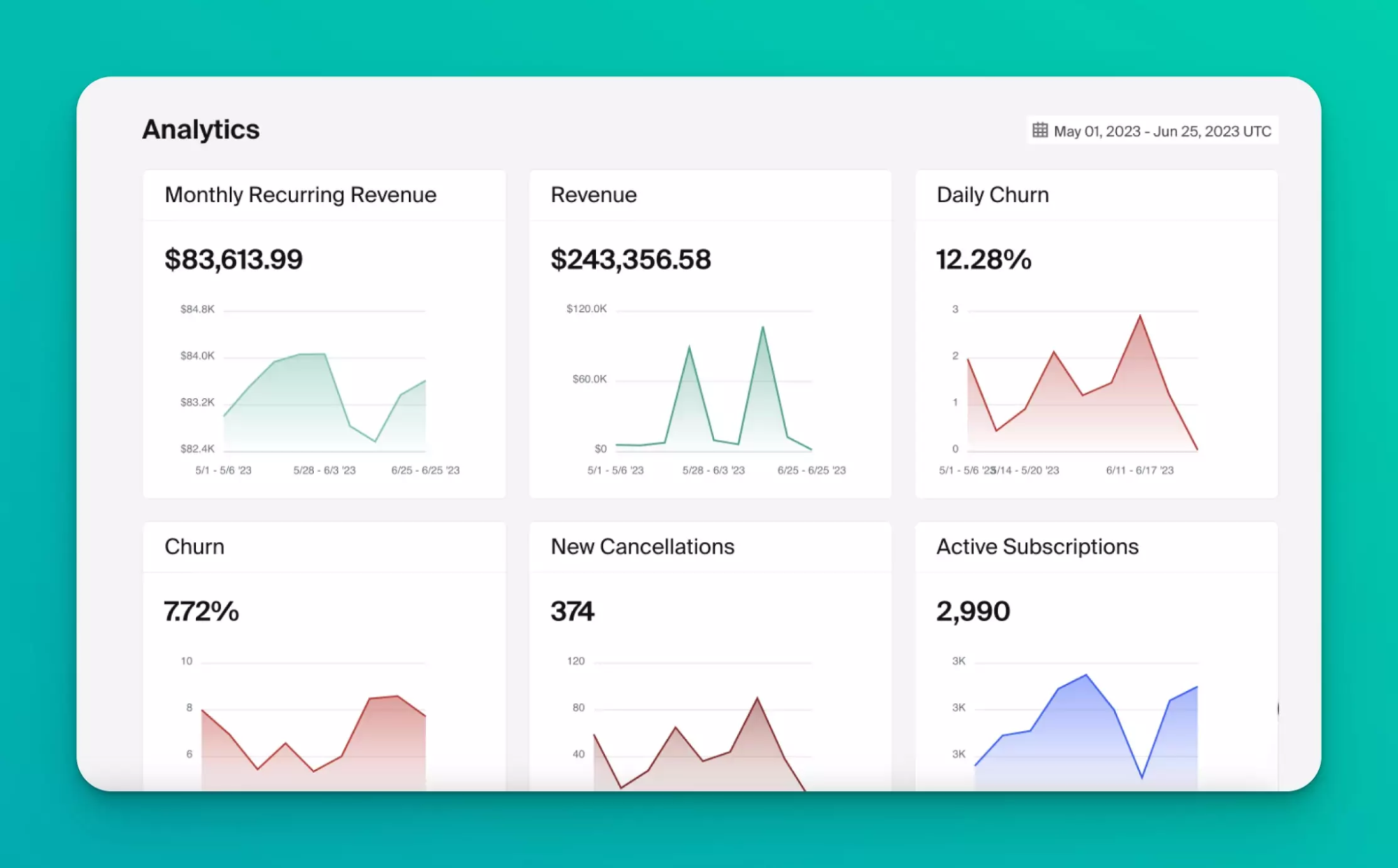
The most important subscription business metrics are those that indicate that you’re delighting your customers and that they’re converting fast, not churning, and becoming cheaper to attract and retain over time.
You’ll find all of these metrics on Subbly:
- Average Revenue Per Subscriber (ARPS): This is the total revenue divided by the total number of subscribers. Although this is similar to the more commonly used average revenue per user (ARPU), we feel it is important to make the distinction between subscribers and users.
- Monthly Recurring Revenue (MRR): This is ARPU (calculated over one month) multiplied by the total subscribers (active in the same month).
- Customer Acquisition Cost (CAC): Divide the cost of sales plus the cost of your marketing efforts by the number of new subscribers in a specific time frame.
- Churn rate: This is the total cancellations in a given period divided by the number of subscribers at the beginning of the period, multiplied by 100 (percentage conversion).
- Lifetime value (LTV): The total revenue a business can expect to earn from a single subscriber over the entire duration of their relationship with the company, calculated by multiplying ARPU by the average subscriber lifespan.
Learn more about metrics with our handy guides:
- ARPU (Average Revenue Per User): In this piece, we’ll discuss what your ARPU is, why it matters in a subscription business model context, and how to calculate it properly to drive results.
- MRR (Monthly Recurring Revenue): Growth rate, average sales price, and productivity are also important metrics; the amount of MRR is the one that really matters to subscription businesses. Read this to find out why.
- CAC (Customer Acquisition Cost): From leveraging social media and guest posts to paid ads, the methods you choose to market your subscription business can send your CAC skyrocketing or plummeting. Here’s everything you need to know.
- Churn Rate: Minimizing churn is important because it’s much more sustainable, and cheaper, to retain current subscribers than to acquire new ones. Beyond sales figures, your churn rate is also a good indicator of how satisfied your subscribers are with your products.
Understanding revenue forecasting
The more data you collect and the more you optimize your offering accordingly, the better your results will be. This helps a lot when it comes to revenue forecasting. To understand this fully, read our full guide on revenue forecasting.
Conquer customer churn from early on
Churn is one of the biggest challenges facing subscription businesses. Your churn rate is the number of subscribers you lose over a defined period of time. This typically occurs in two ways:
- Voluntary churn: Subscribers who make the active choice to unsubscribe from your offering.
- Involuntary churn: Customers whose subscriptions end due to issues like declined credit cards or other circumstances beyond their control.
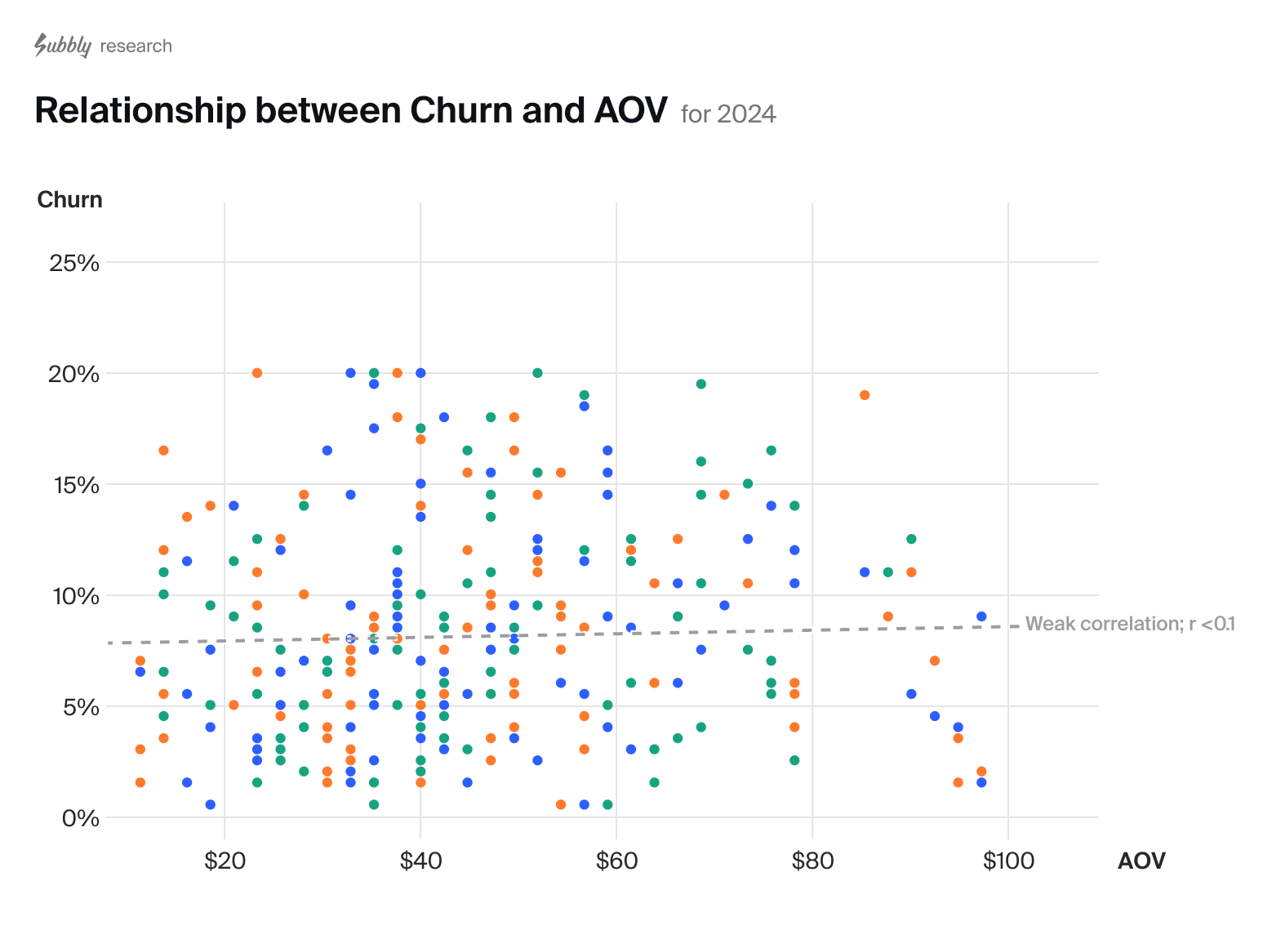
Our research found that the median churn rate across all Subbly merchants, verticals and models was 7.44%.
We found that a number of factors had an impact on churn, including:
- The country you are based in: Businesses based in the Netherlands had the highest churn rate of 16.2%, while in New Zealand this was just 5.2%
- Your product category: Health had the highest median churn rate of any category, while for home and lifestyle this was just 5.8%. However, it is worth noting that the fashion category had a top quartile churn rate of 20.1%.
- Time of year: For example, health category businesses experienced a churn rate of around 17% in November, but just 7% in October.
- Business model: The type of subscription business mattered slightly. For example, membership businesses had a churn rate of 5.5%, while for subscriptions boxes this was 7.1%.
- Business size and MRR: Larger businesses tended to have lower churn rates.
Interestingly, there was no correlation between price and churn. This suggests that factors like market positioning, accurate targeting, product value, customer experience, and service quality are more important for retention.
Subbly’s analytics dashboard is key to making sure you don’t miss a beat:
💡 How Boddle Box dealt with churn
Losing a few subscribers might seem insignificant, but over time, it adds up. This was the case with Boddle Box, a subscription service that sends bath bombs for kids.While using Wix, they faced high voluntary churn, with customers canceling their subscriptions.After switching to Subbly, they introduced options for customers to downgrade or pause their subscriptions.This helped them retain customers during critical moments instead of losing them entirely.
Top strategies for customer retention
It’s significantly cheaper to retain a customer than to acquire a new one. There are many subscriber retention strategies you can try out to keep your customers coming back for more boxes.
At a minimum, set up surveys and automated emails asking for subscriber feedback so you can keep your finger on the pulse.
To reduce involuntary churn, assess your dunning process and associated communication flows and determine where to make the process smoother and easier to interact with.
The earlier you implement processes designed to reduce subscription churn, the easier it’ll be to achieve.
Other strategies include:
- Creating automated offers that trigger at specified subscriber drop-off points.
- Communicating during and beyond the buying journey to maximize engagement.
- Analyzing common points from cancellation surveys and adapting your offer accordingly.
- Offering rewards and downgrade options to lower the subscription cost.
- Making sure all the crucial parts of the billing process are communicated well in advance.
- Credit the customer’s account with a balance after a certain amount of time has passed.
- Add free products to orders that exceed a specified total.
- Send an SMS promoting a one-time product offer at a discounted price.
“Subbly has fantastic marketing features which keep improving, making acquisition increasingly efficient over time. Plus, since Subbly is a subscription-first platform, it has great features for maximizing customer lifetime value and reducing churn.”
James, Founder of Earth & Wheat
💡 Want to learn more? Then check out our guide on how to grow a subscription business.
What Comes Next?
Each of the steps outlined above is easy when you use Subbly. It’s one of the most user-friendly ecommerce platforms out there and thousands of businesses use it to run subscription box businesses.
Subbly is a subscription-first platform with everything you need to get your business started – no plugins necessary.
If you’d like to try Subbly out for yourself, sign up for a free trial. We’re excited to join you on your journey to subscription box success!


